


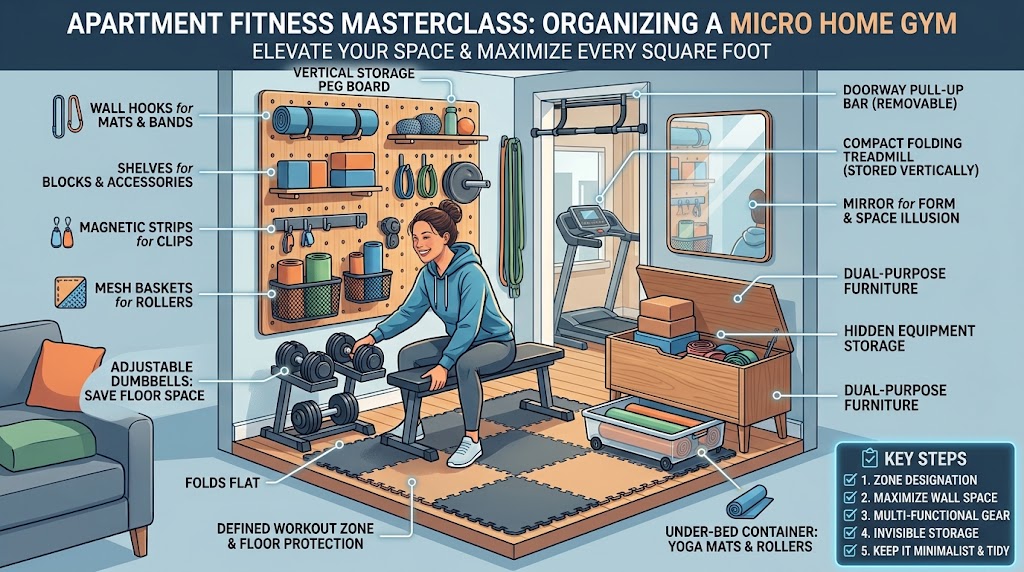
Living in a small apartment does not mean you have to give up on having a home gym. With the right equipment, smart storage solutions, and a little planning, even a small corner of your apartment can become a practical workout space. The key is to focus on equipment that serves multiple purposes and organize everything so your living area remains comfortable.
If you are wondering how to organize a micro home gym in an apartment, you do not need an entire room or expensive machines. A small area near a wall, under a desk, inside a closet, or in an unused corner can be transformed into a compact workout zone. This guide explains how to choose equipment, save space, organize accessories, and create a gym that works for your daily routine.
Why Create a Micro Home Gym?
A micro home gym is a small workout area designed to provide the essentials without taking over your apartment. It can be especially useful for people who have limited space or prefer exercising at home instead of traveling to a commercial gym.
A well-organized home gym can also make it easier to maintain a regular workout routine. When your equipment is easily accessible, you are less likely to waste time setting everything up before exercising.
The goal is not to own dozens of fitness products. Instead, choose a few versatile pieces of equipment that allow you to perform different types of exercises.
1. Choose the Right Location
The first step is finding a suitable location. You do not necessarily need a separate room. Look around your apartment for an unused corner or area that can temporarily become your workout zone.
Good options include a corner of the bedroom, part of the living room, a home office area, or an open space near a wall. If you have a balcony or enclosed utility area, make sure it is appropriate and safe for exercise before using it.
Measure the available space before purchasing equipment. This simple step can prevent you from buying something that is too large for your apartment.
2. Start With a Small Workout Mat
A quality exercise mat is one of the most useful items for a micro gym. It provides a dedicated workout surface for exercises such as stretching, yoga, planks, push-ups, abdominal exercises, and bodyweight workouts.
Choose a mat that can be rolled up after your workout. Store it vertically behind a door, beside a wardrobe, or in a dedicated corner. This keeps the floor clear when you are not exercising.
3. Invest in Multi-Purpose Equipment
When space is limited, every piece of equipment should have more than one purpose. Instead of purchasing large machines, focus on compact equipment that can be used for several exercises.
Some useful options include:
- Adjustable dumbbells
- Resistance bands
- A kettlebell
- Jump rope
- Adjustable bench
- Exercise mat
- Small stability or fitness ball
Resistance bands are particularly useful because they are lightweight and can be stored in a drawer or small container. Adjustable dumbbells can also save considerable space compared with keeping several pairs of fixed-weight dumbbells.
4. Use Vertical Storage
One of the best ways to organize a small apartment gym is to use vertical space. Floors are limited, but walls and the back of doors can provide additional storage opportunities.
You can use suitable wall-mounted hooks or storage systems to hold resistance bands, jump ropes, yoga mats, and other lightweight accessories. However, make sure anything mounted to a wall is properly installed and suitable for the wall structure and equipment weight.
A tall shelving unit can also be useful. Store smaller accessories on the shelves while keeping heavier equipment on lower levels for stability.
5. Use Storage Baskets and Containers
Small fitness accessories can quickly make an apartment look messy. Items such as resistance bands, skipping ropes, gloves, towels, and exercise straps should have a designated storage location.
A simple basket or storage box can solve this problem. Place all small accessories in one container and keep it next to your workout area.
You can also use separate containers for different categories. For example, keep resistance equipment in one box and recovery accessories in another. This makes it easier to find what you need before a workout.
6. Consider Foldable Equipment
If you have enough space for larger equipment, choose foldable designs whenever possible. A folding workout bench, collapsible bike, or compact exercise equipment can be stored against a wall when it is not being used.
This is particularly helpful if your workout area is also your living room or bedroom. After exercising, you can return the equipment to its storage position and reclaim the space.
Before buying any foldable product, check its dimensions when both folded and unfolded. The equipment should fit comfortably without blocking doors, walkways, or other important areas.
7. Create a Dedicated Equipment Zone
Even a micro gym benefits from organization. Try to keep all workout equipment in one general area rather than spreading it throughout the apartment.
For example, you could place your exercise mat against the wall, store dumbbells underneath a bench, and keep resistance bands in a nearby basket. This creates a small but functional fitness station.
A dedicated equipment zone also makes it easier to maintain your workout habit because everything you need is available in one place.
8. Keep Noise in Mind
Apartment living requires extra consideration when it comes to noise. Dropping weights, jumping heavily, or using noisy equipment can disturb neighbors, particularly in buildings with thin floors or shared walls.
Use a suitable exercise mat or protective flooring beneath equipment where appropriate. Avoid dropping weights and consider low-impact exercises if noise is a concern.
Instead of high-impact jumping exercises, you can perform controlled movements such as squats, lunges, push-ups, resistance-band exercises, and strength-training movements.
9. Make the Space Comfortable
Your micro gym should be a place where you actually want to exercise. Good lighting and ventilation can make a small workout area much more comfortable.
If possible, position your workout space near natural light or in an area with good airflow. Keep a water bottle nearby and have a towel available during workouts.
A mirror can also be useful because it allows you to check your exercise form. However, make sure the mirror is securely installed and positioned safely.
10. Keep the Gym Clutter-Free
The biggest mistake people make with small home gyms is allowing equipment to accumulate. Buying more equipment does not necessarily mean getting better workouts.
Before purchasing something new, ask yourself whether it provides a function that your existing equipment cannot provide. If you rarely use a particular item, consider removing it from your workout area.
A simple rule is to keep only equipment that you regularly use. This keeps your apartment gym functional rather than turning it into a storage area.
Example Micro Home Gym Setup
You can create an effective beginner-friendly gym using a surprisingly small amount of equipment. For example, one corner of a room could contain:
- One foldable exercise mat
- One pair of adjustable dumbbells
- A set of resistance bands
- One kettlebell
- One jump rope
- A small storage basket
This setup can support a wide range of exercises, including squats, lunges, rows, presses, curls, deadlift variations, resistance-band movements, core exercises, and mobility work.
How to Keep Your Apartment Gym Organized
Organization becomes much easier when you follow a consistent routine. After every workout, return each item to its designated location. Wipe down equipment when necessary and keep your workout mat clean and dry.
Once a month, review your equipment and remove anything you no longer use. This prevents your micro gym from gradually becoming overcrowded.
You can also create a simple workout schedule and keep it on your phone. Having a planned routine can make your small gym more useful and help you stay consistent.
Common Mistakes to Avoid
- Buying large machines without measuring available space.
- Purchasing too much equipment at the beginning.
- Leaving weights and accessories on the floor.
- Ignoring noise and neighbors in an apartment building.
- Blocking doors, windows, or walkways with gym equipment.
- Using damaged equipment.
- Failing to clean workout equipment regularly.
- Choosing equipment without considering your actual fitness goals.
Frequently Asked Questions
How much space do I need for a micro home gym?
You can create a useful workout area in a relatively small space. The exact amount depends on your exercises and equipment, but a clear area large enough for a workout mat is a practical starting point for many bodyweight and resistance exercises.
What is the best equipment for a small apartment gym?
Adjustable dumbbells, resistance bands, a kettlebell, an exercise mat, and a jump rope are versatile options. The best equipment depends on your fitness goals and available space.
How can I store gym equipment in a small apartment?
Use vertical storage, baskets, shelves, under-bed storage, and foldable equipment. Keeping accessories in dedicated containers can also prevent clutter.
How can I reduce gym noise in an apartment?
Use appropriate flooring or mats, avoid dropping weights, and focus on controlled or low-impact exercises. Be especially careful with jumping and heavy equipment in apartments with shared floors.
Final Thoughts
Creating a home gym in a small apartment is more about smart organization than having expensive equipment. By choosing versatile fitness products, using vertical storage, keeping equipment organized, and making the most of an unused corner, you can create a practical workout area without sacrificing valuable living space.
If you are learning how to organize a micro home gym in an apartment, start small. A workout mat, adjustable resistance equipment, and a few carefully selected accessories can provide plenty of exercise options. As your fitness routine develops, add equipment only when you genuinely need it.
The most effective home gym is not necessarily the biggest one. It is the one that is convenient, organized, safe, and easy to use consistently.