


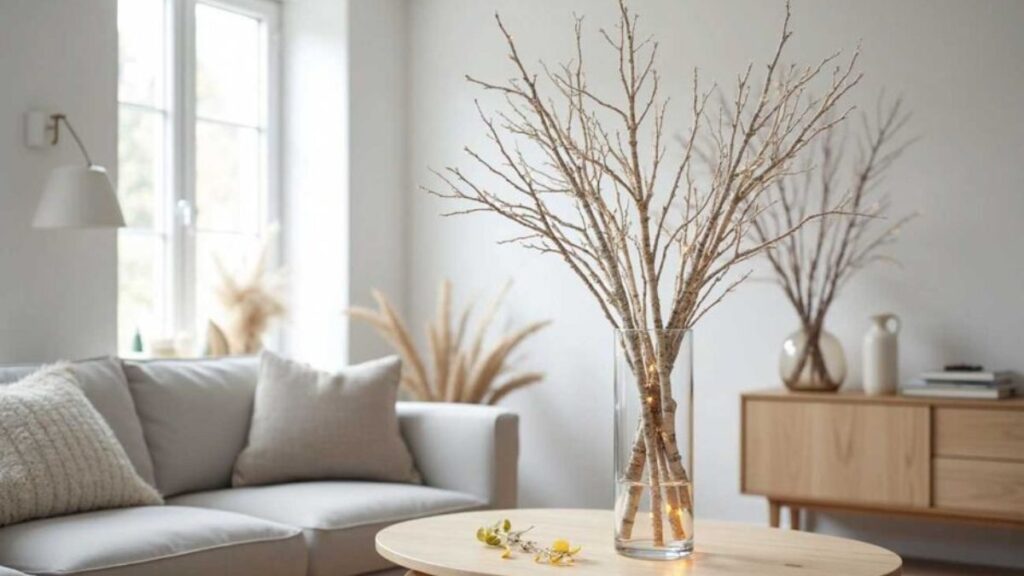
Pyntekvister, a term from Norway and Denmark meaning “decorative twigs” or “ornamental branches,” is a Scandinavian tradition that brings nature into the home. This practice involves using natural or artificial branches to create simple, elegant, and sustainable decor that enhances any room with calm and organic beauty.
Origins and Cultural Significance
Pyntekvister has deep roots in Nordic rural traditions, where families used branches for both decoration and symbolism. During winter festivities, branches adorned with candles and handmade ornaments brought light and celebration into dark months, while spring celebrations used budding twigs to symbolize renewal and fertility. This practice reflects the Scandinavian way of life, where nature is integral to daily existence and helps maintain a connection to the outdoors during long winters.
The word “pyntekvister” combines “pynt” (decoration) and “kvister” (twigs or branches), literally translating to “decorative branches”. Over time, this practice has evolved from rural folk tradition into a modern design style that blends organic textures with contemporary decor techniques.
Types of Pyntekvister
Pyntekvister can be created using various types of branches and materials, each offering unique aesthetic and practical benefits. Natural branches provide authenticity and seasonal texture, while painted branches add vibrant colors for modern interiors.
| Type of Pyntekvister | Best Used For | Material | Lifespan |
|---|---|---|---|
| Natural Birch | Minimalist decor | Birch | 6-12 months |
| Natural Willow | Rustic arrangements | Willow | 4-8 months |
| Painted Branches | Modern interiors | Twigs + paint | 1-3 years |
| LED-Enhanced | Winter/holiday decor | Wire + LED | 3-5 years |
| Artificial | Long-term displays | Faux materials | 5+ years |
Birch branches offer clean Scandinavian aesthetics, with smooth, pale bark that complements minimalist interiors perfectly. Willow branches provide more dramatic curves, while cherry branches work beautifully for spring arrangements. For those seeking creative alternatives, twisted paper designs offer unique DIY possibilities, and beaded or fabric-wrapped branches add whimsical touches to events and children’s spaces.
Styling Ideas for Different Rooms
Pyntekvister can transform any space with minimal effort. Their appeal lies in natural textures and the ability to bring calm and balance into a space—values deeply rooted in Scandinavian aesthetics.
- Living Room: Place tall pyntekvister in a floor vase next to the couch or fireplace, using a textured ceramic or matte black vase to contrast the natural lines of the branches.
- Dining Room: Use a cluster of minimalist branches in a low vase as a centerpiece, perhaps paired with a linen runner for a soft, seasonal touch.
- Bedroom: Place a few eucalyptus branches in a glass bottle on a nightstand for freshness and calm, or mix with dried lavender for fragrance.
- Bathroom: A small bunch of thin twigs on a corner shelf or beside the mirror instantly creates a spa-like, luxurious feel.
Beyond the home, pyntekvister is also popular in commercial settings such as cafes, shops, and hotels for visual merchandising, as they are low-cost yet highly effective in creating atmosphere.
DIY Pyntekvister Projects
Creating your own pyntekvister is an affordable and rewarding way to personalize your space. Always collect fallen branches instead of cutting fresh ones unnecessarily, looking for interesting shapes and sturdy stems without damage or pests.
Basic Materials Needed
- Fresh or dried branches (birch, willow, cherry, or hazel)
- Pruning shears or sharp scissors
- Weighted vase or container
- Optional: spray paint, LED lights, or seasonal decorations
Simple DIY Ideas
- Spray-Painted Twigs: Grab some dry branches and spray them gold, silver, or matte black for an instant modern look.
- LED-Lit Branches: Wrap fairy lights around twigs for a magical nighttime ambiance.
- Hanging Ornaments: Use decorative branches as a tree alternative during holidays, hanging handmade ornaments, crystals, or small photos.
- Painted Buds or Tips: Dip branch tips in white paint or glitter for a frosted winter look.
Sustainability and Seasonal Creativity
Pyntekvister aligns perfectly with eco-friendly decorating principles. Sustainable tips include using fallen twigs from your own backyard, avoiding plastic branches when possible, reusing seasonal arrangements by storing them safely, and choosing local, dried botanical sellers.
Seasonal variations keep pyntekvister fresh throughout the year. Use red berries in winter, budding twigs in spring, green eucalyptus in summer, and amber-toned leaves in fall. At Christmas, frosted branches adorned with lights bring a magical winter forest indoors, while Easter decorations with painted eggs and feathers mark renewal and spring.
Why Pyntekvister Is Trending in Modern Design
In 2025, pyntekvister represents more than just decoration—it embodies a lifestyle that values connection to nature and conscious living. As people lean into eco-friendly decor, pyntekvister stands out as a beautiful way to reduce plastic use while enhancing style. The trend is tied to a broader movement embracing Scandinavian interior choices: neutral colors, raw textures, and greenery, reflecting a current passion for mindful design that offers calm energy in a chaotic world.
Final Thoughts
Pyntekvister proves that beauty can be found in the simplest parts of nature. Whether you are decorating your home, planning an event, or looking for a unique DIY project, these decorative branches are a beautiful and affordable way to transform any environment. With their minimalistic charm, sustainability, and timeless appeal, pyntekvister offer a quiet yet powerful way to bring the Scandinavian art of nature-inspired decor into your life.