Connect with us

Lifestyle

Flexible Fuel Delivery Options for Budget-Conscious Homeowners

Published

on


Key Takeaways

  • Understanding different fuel delivery plans can lead to significant savings.
  • Automatic delivery ensures a consistent fuel supply without manual ordering.
  • Budget plans offer predictable monthly payments, making financial planning easier.
  • Cash-on-Delivery (COD) options provide control over purchase timing and pricing.
  • Combining delivery plans with energy-saving practices maximizes cost efficiency.


Managing home heating costs is a top concern for many households, especially during colder seasons when expenses tend to rise quickly. Thankfully, there are different approaches to fuel delivery that allow families to control costs while ensuring their homes remain warm and comfortable. Exploring solutions such as cash heating oil delivery can help you avoid unexpected bills and make your energy spending more manageable.

Flexible delivery options give homeowners ways to balance convenience, predictability, and price. Whether you value regularly scheduled service or prefer to pay as you go, there is a delivery plan designed to suit your budget and consumption habits. Understanding your choices and how to maximize their benefits can result in noticeable annual savings.

In this article, you will learn about the range of delivery solutions available, from automatic supply to pay-at-delivery models. We’ll also look at how energy-saving techniques can stretch your dollar further, letting you stay comfortable without overspending. Combined, these strategies can make a significant difference in how you manage home heating expenses over time.

By making informed decisions about fuel buying and taking steps to reduce usage, budget-conscious homeowners can weather the heating season without financial stress. Exploring your options ahead of the colder months allows you to choose the plan and provider that best match your family’s needs. With these steps, you can avoid costly surprises and enjoy a warm home all winter long.
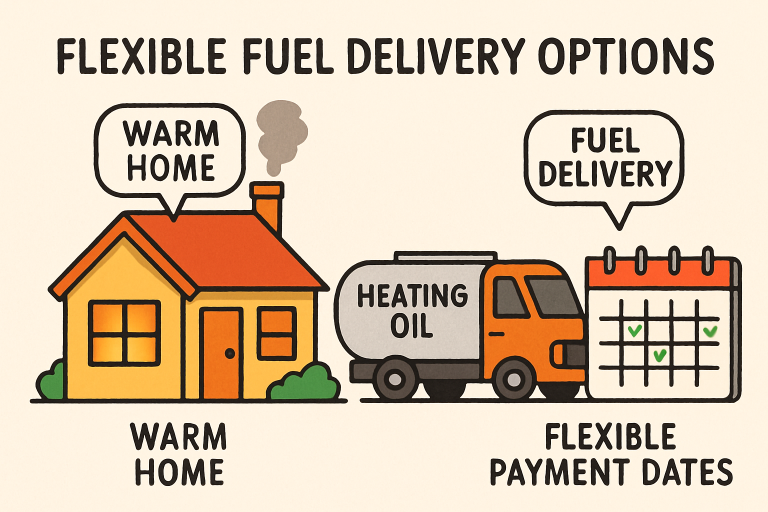


Automatic Delivery

Automatic delivery services rely on technology and careful tracking of your fuel consumption. Your supplier monitors both your usage patterns and local weather data to estimate when your tank will need refilling. Deliveries are scheduled before you run low, removing the stress of monitoring supply or making emergency calls for more fuel.

This approach is especially beneficial in areas where winter can bring sharp cold snaps, as it prevents you from running out of heating fuel at a critical time. Most reputable suppliers offer this service to ensure customers always have enough fuel. In addition to peace of mind, some companies offer service monitors and alerts to keep you informed about tank status.


Budget Plans

For families concerned about uneven heating bills, budget plans can make a notable difference. These plans calculate your household’s likely annual fuel usage, then break the total cost into equal monthly payments. Spreading out the cost smooths cash flow and helps avoid the spike in expenses that often comes during the heart of winter. Some suppliers may adjust payments mid-season if temperatures or consumption greatly deviate from forecasts, ensuring you are never overcharged or left with an unexpected balance.

Budget payment plans are ideal for those on a fixed income or anyone wanting predictability in their monthly expenses. Before enrolling, it is wise to review the provider’s policies about mid-year adjustments and any potential fees for plan participation.


Cash-on-Delivery (COD)

Cash-on-Delivery (COD) services give homeowners even more control over their heating costs by allowing them to order fuel as needed and pay at the time of delivery. By monitoring fuel levels and tracking market prices, you can order fuel when prices are lower and avoid being locked into a fixed rate. Many budget-conscious families report that using COD lets them compare offers among local suppliers and potentially save a considerable amount on each delivery.

In some regions, you might save $50 to $80 per 100 gallons compared to traditional fixed contracts. However, this method does require more attention to your fuel levels and the discipline to order before running low, especially during busy periods when suppliers experience high demand. For those willing to keep an eye on the gauge and shop competitively, COD can be an excellent way to save money.


Energy-Saving Practices

Whichever fuel delivery option you select, pairing it with smart energy-saving practices amplifies your savings. Start by installing programmable or smart thermostats that let you automatically adjust home temperatures. According to the U.S. Department of Energy, lowering your thermostat by 7 to 10 degrees for 8 hours a day could reduce your heating bill by up to 10 percent a year.

  • Regular Maintenance: Scheduling annual tune-ups for your heating system ensures it runs at peak efficiency, using less fuel to generate the same warmth.
  • Insulation and Sealing: Adding insulation to attics, walls, and crawl spaces and sealing gaps around doors and windows can sharply reduce heat loss, making your current fuel supply last longer.

Simple improvements like weatherstripping and upgrading to energy-efficient windows can make your entire heating system more efficient, further lowering overall costs.


Conclusion

Choosing a flexible fuel delivery plan and implementing energy-saving habits can dramatically lower heating costs for budget-minded homeowners. Start by assessing your household’s consumption, risk tolerance, and cash flow needs, then compare what area suppliers offer in terms of pricing, reliability, and contract terms. Do not forget to improve home efficiency, as every dollar you save on usage is a dollar you do not have to spend on fuel. With the right strategy, you can enjoy both comfort and financial peace of mind throughout the colder months.


Continue Reading
Click to comment

Leave a Reply

Your email address will not be published. Required fields are marked *

Lifestyle

Innovations in Sheet Metal Fabrication: Enhancing Efficiency and Precision

Published

on

By

Key Takeaways

  • 3D printing reduces costs and speeds up die production by building them layer by layer from digital files.
  • Automation is fueling significant market growth and helping companies respond to industry demands.
  • Digital twin systems bring improved monitoring and control, enhancing overall process reliability.
  • Artificial intelligence accelerates design optimization, resulting in more efficient designs and improved product quality.

As a critical element in modern manufacturing, sheet metal fabrication plays a vital role in producing high-quality components for industries such as automotive, aerospace, and electronics. With the rise of cutting-edge technologies, companies are finding new opportunities to streamline processes and raise quality standards. Recent innovations are pushing boundaries and offering new ways to achieve precision, flexibility, and efficiency in operations. Businesses seeking advanced capabilities, like those in sheet metal fabrication Columbus OH, are positioned to benefit immensely from these developments, leading to greater cost savings and increased competitiveness.

Continuous advancements in materials sciences, digital integration, and intelligent automation have completely transformed traditional fabrication workflows. This shift not only reduces environmental impact and manufacturing lead times but also boosts product customization and adaptability to changing customer demands. The impact of these technologies ripples through multiple sectors, enabling manufacturers to respond with agility and improved consistency.

3D Printing: A Game-Changer in Die Production

Traditional die-making methods can be resource-intensive, requiring skilled labor and high material volumes. The growing adoption of 3D printing, also known as additive manufacturing, has unlocked a faster, more sustainable way to create precision tools and dies. Producing dies progressively from thin layers enables complex shapes and tailored geometries that are unachievable with subtractive methods. The reduction in material waste further bolsters both economic and environmental benefits, which align closely with global sustainability goals.

3D-printed dies streamline production cycles by eliminating lengthy machining operations and enabling design tweaks to be implemented quickly. In industries like automotive, this technology shortens project timelines and enables engineers to iterate on designs rapidly. The economic impact is evident in reduced costs and lower barriers for prototyping and custom part creation, making 3D printing one of the fastest-growing trends in manufacturing today.

Market Growth Driven by Automation

The global market for sheet metal fabrication services has experienced robust growth, driven by increased automation and the adoption of high-tech manufacturing solutions. It is projected to reach $17.2 billion by 2026, with companies investing in automated systems for cutting, folding, and assembly. These systems not only improve throughput but also enhance job safety and reduce the risk of errors caused by human intervention.

Automation allows manufacturers to allocate resources more efficiently, reallocating labor to tasks that demand high-level problem-solving or creativity. With technologies such as robotic arms and automated guided vehicles (AGVs), production lines achieve faster cycle times and greater product uniformity.

Digital Twins: Bridging the Physical and Virtual Worlds

Digital twins are swiftly becoming a cornerstone of next-generation manufacturing. By digitally replicating physical production processes, digital twin technology provides real-time data and feedback about every stage of fabrication. This system enables instant intervention when anomalies occur and fosters continuous process improvement.

With a digital twin, manufacturers can employ predictive maintenance and optimize toolpaths before actual production. For example, the virtual model can simulate metal-forming operations to predict strains and optimize settings, reducing costly trial-and-error. Digital twins are an invaluable asset in industries where downtime results in significant financial losses.

AI-Assisted Design Optimization

Artificial intelligence has also entered the realm of sheet metal fabrication, enhancing design quality through advanced computational analysis. By leveraging machine learning and predictive algorithms, engineers can evaluate thousands of design permutations in minutes. This speeds up the prototyping process and uncovers more efficient geometrical configurations that may not be evident through manual approaches.

Incorporating AI into design software reduces development time for new products. It also optimizes resource use and ensures that finished components meet strict performance specifications. With AI-driven simulations, issues like excessive material use or weak points in a part can be identified and addressed long before manufacturing begins, resulting in stronger, lighter, and longer-lasting metal products.

Industry Recognition and Expansion

Firms that embrace these innovation trends are seeing recognition across the sector and substantial growth opportunities. For example, a leading precision sheet metal fabrication company in Texas was recognized as the 2025 Industry Award winner by The Fabricator magazine, which highlights achievements in operational excellence and the application of advanced technologies. This accolade encourages further development and reinforces the importance of continuous innovation in maintaining a competitive edge.

As demand for high-quality, intricately engineered components continues to grow, such companies are expanding their facilities and investing in next-generation equipment. The willingness to adopt novel production methodologies translates into higher customer satisfaction and a strong industry standing.

Conclusion

With a firm foundation in traditional manufacturing disciplines and a bold movement toward digital integration, the sheet metal fabrication industry stands at the forefront of industrial innovation. Advancements like 3D printing, automation, digital twins, and AI optimization are transforming operational capabilities, enabling manufacturers to meet the dynamic needs of global markets. Those who invest in these groundbreaking technologies are poised for sustained growth, market leadership, and ongoing recognition in an increasingly sophisticated landscape.

Continue Reading

Lifestyle

Alberta bets on scale to keep tech companies at home

Published

on

By

Alberta bets on scale to keep tech companies at home

For decades, tracking the spread of influenza across the globe was a reactive endeavor. Health authorities relied on a patchwork of delayed reports—doctor visits, laboratory confirmations, and hospitalization records—that often painted a picture of an outbreak only after it had already occurred. This information lag, typically one to two weeks behind real-time conditions, has long been the Achilles’ heel of public health .

That era is coming to an end. Today, a new generation of artificial intelligence (AI) tools is turning the tide, moving flu tracking from a retrospective analysis to a predictive, real-time science. By digesting vast and varied data streams—from molecular diagnostics to social media trends and wearable fitness trackers—AI is building a global immune system capable of detecting and responding to influenza with unprecedented speed and accuracy.

From Reactive Data to Predictive Intelligence

Traditional flu surveillance is like driving a car by looking only in the rearview mirror. It provides essential context but offers little warning about the road ahead. The integration of AI and machine learning (ML) is fundamentally changing this dynamic. AI excels at identifying complex patterns and anomalies within massive datasets that would be impossible for humans to process manually. In the context of infectious diseases, this translates to the ability to detect early signals of an outbreak hidden within seemingly unrelated information .

The ultimate goal is not just to track where the flu is now, but to forecast where it will be tomorrow. This involves moving beyond traditional statistical models to sophisticated algorithms that can learn from historical data, adapt to new information, and generate probabilistic predictions about the future trajectory of an epidemic.

The Data Revolution: Unconventional Sources for Early Signals

The power of modern AI-driven surveillance lies in its ability to integrate diverse data sources. The more information the AI has, the more accurate its predictions become. These sources range from the highly clinical to the broadly societal.

1. Mining Open-Source Intelligence

One of the most significant advancements is the use of AI to scan open-source data. Platforms like EPIWATCH act as an early-warning system by scouring vast amounts of publicly available information, including news reports, social media posts, and public health list-servs . This approach is particularly valuable in regions where traditional surveillance infrastructure may be weak, slow, or compromised.

A powerful case study of this capability occurred in late 2023. EPIWATCH detected a peak in pneumonia cases in China during October and early November, weeks before the World Health Organization officially reported clusters of undiagnosed pneumonia in children’s hospitals in Beijing . By identifying a surge in “influenza-like illness” and “pneumonia” keywords, the AI provided an early signal of an unusual respiratory outbreak, allowing researchers and health agencies to investigate sooner than they otherwise might have .

2. Harnessing Digital Exhaust: Search Trends and Wearables

Our collective digital behavior leaves a trail of data that is incredibly useful for public health. When people feel sick, they often turn to the internet for answers. AI systems can analyze anonymized Google search trends to gauge flu activity in near real-time. This concept, which gained prominence with Google Flu Trends, has been refined and integrated into more robust predictive models. Researchers have recently developed machine learning early warning systems that combine these digital traces with traditional epidemiological data to predict outbreak onsets and peaks at the state level. During the 2024-2025 flu season, one such system successfully detected 98% of outbreak onsets with an average lead time of five weeks .

Similarly, the ubiquity of wearable sensors like Fitbits and smartwatches has opened a new frontier in personal health monitoring. These devices passively collect data on heart rate, steps taken, and sleep patterns. AI algorithms can detect subtle physiological changes indicative of illness, often before the user even feels symptoms. A study published in 2024 demonstrated that an AI model using a combination of wearable sensor data and self-reported symptoms could distinguish between influenza-positive and influenza-negative individuals with moderate accuracy. The top predictive features included cough, fever, and—crucially—changes in mean resting heart rate during sleep . This suggests that in the future, your smartwatch might not just tell you it’s time to stand up, but also suggest you get tested for the flu.

3. Real-Time Molecular Diagnostics

Perhaps the most direct source of real-time data comes from the diagnostic tests themselves. Traditional surveillance relies on retrospective reporting, but a new platform from the molecular diagnostics company Seegene, called STAgora™, aims to change that . Launched in July 2025, STAgora is an AI-driven platform that aggregates and analyzes data from PCR tests in real-time.

Unlike systems that wait for aggregated reports, STAgora provides immediate, structured diagnostic reports from the municipal to the continental level . It visualizes outbreaks as they happen, based on actual test results. With over 40 built-in statistical tools powered by AI, it can detect abnormal pathogen patterns early, predict seasonal trends, and even monitor for co-infections, where a person is infected with more than one pathogen simultaneously . This represents a shift from waiting for data to having data streamed in real-time from laboratories around the world.

The Brains of the Operation: How AI Models Make Predictions

The raw data from searches, wearables, and labs is only as good as the algorithms that interpret it. Several types of AI and machine learning models are at the forefront of this effort.

  • Hybrid Deep Learning Models: Researchers are increasingly turning to hybrid models that combine the strengths of different neural networks. For instance, a CNN-LSTM model (Convolutional Neural Network – Long Short-Term Memory) has proven highly effective in forecasting flu activity. The CNN excels at extracting key features from the data, while the LSTM, which is designed to recognize patterns over time, is superb at predicting future trends based on that information. A study using data from 28 sentinel hospitals in China’s Hebei Province found that this hybrid model outperformed traditional forecasting methods like SARIMA and even standard machine learning models like XGBoost .
  • Ensemble Voting Algorithms: To increase reliability, some systems use an “ensemble” approach, where multiple algorithms vote on the most likely outcome. This method was key to the success of the U.S. state-level early warning system mentioned earlier, which combined various machine learning models to predict outbreak onsets and peaks with remarkable accuracy .

The Challenge of Integration: Building a Coherent System

Despite the promise of these new technologies, creating a unified global surveillance system is fraught with challenges. The data landscape is messy. Different regions use different surveillance methods with varying levels of completeness, timeliness, and accuracy.

A study published in Influenza and Other Respiratory Viruses in 2025 proposed a framework for evaluating which surveillance systems are best suited for AI and ML applications . By analyzing systems in New Zealand, researchers found that the most effective for AI training were those with high completeness, specificity, and historical data, while the best for short-term forecasting prioritized timeliness and robustness .

This highlights a critical point: AI is not a magic bullet. Its effectiveness depends entirely on the quality of the data it is fed. Integrating data from self-reported symptom trackers (which are timely but lack specificity) with lab-based surveillance (which is accurate but often delayed) is a key area of development. The goal is to create a “bridged” system where the strengths of one data source compensate for the weaknesses of another .

A Proactive Future for Global Health

The convergence of AI with epidemiology is forging a new paradigm for global health security. We are moving from a model of reaction to one of proaction. The ability to predict an outbreak weeks in advance, as demonstrated by the 2024-2025 U.S. forecast, allows hospitals to stockpile supplies, public health officials to target vaccination campaigns, and communities to prepare .

Platforms like STAgora envision a “smarter, faster, and more connected global health defense system,” where real-time diagnostic data informs clinical decisions and public policy instantly . Meanwhile, open-source tools like EPIWATCH ensure that even regions without robust health infrastructure are not left in the dark, providing an early warning when the usual channels fall silent .

The path forward involves not only refining the algorithms but also building the international trust and infrastructure necessary to share sensitive health data. Privacy concerns, data standardization, and equitable access to these tools remain significant hurdles. However, the trajectory is clear. In the fight against influenza and future pandemics, AI is proving to be an indispensable ally—a digital canary in the coal mine, chirping a warning long before the air becomes unbreathable.

Continue Reading

Lifestyle

Signs Your Septic System Needs Immediate Attention

Published

on

By

Septic System

Key Takeaways

  • Recognize early signs of septic system issues to prevent major problems.
  • Regular maintenance can extend the lifespan of your septic system.
  • Professional inspections are essential when warning signs appear.

Table of Contents

  • Introduction
  • Slow Drains and Gurgling Sounds
  • Unpleasant Odors
  • Standing Water in the Yard
  • Lush Green Patches of Grass
  • Sewage Backups
  • High Water Levels in the Tank
  • Frequent Need for Pumping
  • Preventive Measures and Maintenance

A well-functioning septic system is essential for protecting both your home and your environment. Ignoring early symptoms of septic trouble can lead to costly emergencies and serious health hazards. Knowing how to spot the early indicators of a problem is your best defense against major repairs and unpleasant surprises. Before minor issues escalate, make sure to understand what your septic system is telling you. For those looking for trusted septic tank cleaning Orlando FL services.

Households with septic systems benefit from routine maintenance and vigilance. Even small changes in your drain performance or unusual smells could be early signs of a bigger problem waiting beneath the surface. By acting fast when warning signs appear, you can save money, protect your property, and ensure your family’s health and safety for years to come.

Slow Drains and Gurgling Sounds

Slow-draining drains are often one of the first clues that your septic system needs attention. If you notice a lag in water disappearing from your sinks, bathtubs, or toilets, it may signal a buildup or blockage in your pipes or tank. Gurgling noises from your plumbing are another warning sign, indicating air pockets caused by improper flow. When waste moves slowly through the system, it not only leads to inconvenience but can also signal an overfilled or failing tank. If you catch these signs early, you are less likely to face extensive damage down the road. For more insight, the EPA’s guide on septic system care provides in-depth advice on septic maintenance.

Unpleasant Odors

A persistent foul smell coming from drains or areas near your septic tank is a symptom that should not be ignored. These unpleasant odors are often caused by gases generated from decomposing waste that your septic system is failing to filter. Odors can seep out of the system when it is full or when pipes are cracked or loose. Not only can these smells create discomfort for your household, but they may also indicate dangerous conditions, including the presence of hazardous pathogens or chemical buildup that could affect your indoor air quality.

Standing Water in the Yard

If you observe puddles or soggy soil in your yard, particularly around the drain field, it is likely related to septic system trouble. This happens when wastewater escapes from the system or the drain field rather than dispersing safely underground. Standing water poses a threat by increasing the risk of contamination to nearby water sources and is a signal that untreated sewage could be present on your property. Immediate intervention is necessary when you see these warning signs.

Lush Green Patches of Grass

While a green lawn is attractive, patches of exceptionally lush or dark green grass can indicate a leak in your septic system. The extra nutrients found in effluent leaking from the tank act as fertilizer, creating noticeable contrasts in your lawn. This leak may indicate a malfunctioning system and should be checked before it leads to more serious contamination or costly repairs.

Sewage Backups

Sewage backups are a severe warning sign that your septic system may be at its limit or blocked. When wastewater cannot flow from your home to the septic tank or through the drain field, it may back up into plumbing fixtures. This can cause bathroom drains, sinks, or even your bathtub to overflow with untreated waste, resulting in a hazardous mess. Immediate professional action is required to keep your home and family safe.

High Water Levels in the Tank

Maintaining the proper water level in your septic tank is integral for its efficient operation. If water levels become abnormally high, it usually indicates clogs or system failures that are preventing normal drainage. A tank left in this state for too long may allow solids to enter the drain field, blocking it and further compounding the problem. Regular septic system inspections are the best way to identify such issues early and avoid major failures.

Frequent Need for Pumping

Most septic tanks require pumping every three to five years, depending on household size and water usage. If you find yourself scheduling pump-outs more frequently than this, it may mean your system is overwhelmed, undersized, or malfunctioning. Common causes include leaks in the inlet or outlet pipes, excess water entering the system, or buildup of non-biological waste. Consulting an experienced technician can help determine whether your system needs repair or replacement to restore proper function.

Preventive Measures and Maintenance

Schedule Regular Inspections and Pumping

Routine maintenance is the foundation of a reliable septic system. Schedule professional inspections regularly to check for leaks, blockages, and tank integrity. Routine pumping prevents solids from accumulating and keeps your system operating smoothly.

Water Usage and Household Practices

Be conscious of your household’s water consumption. Spread out laundry loads and fix any leaking faucets or toilets to minimize the volume entering your septic system. Never flush non-biodegradable items, chemicals, or grease, as they can disrupt the natural breakdown of waste and cause clogs or failures.

Recognize and Respond Early to Issues

Know the warning signs, and don’t wait to address them. Early response prevents small problems from escalating into costly repairs or health concerns. Keep a record of past maintenance and pumping to help professionals diagnose issues efficiently.

Staying alert to these signs and investing in septic system maintenance can save you considerable time, money, and stress. If you recognize any of these issues, contact a certified septic professional for a thorough inspection and service.

Continue Reading

Trending