


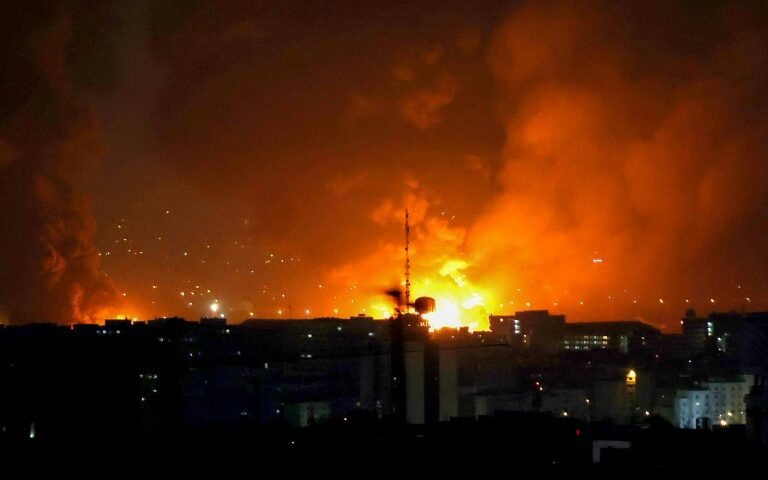
The recent strikes on Iran, which resulted in the death of Supreme Leader Ayatollah Ali Khamenei and other top officials, mark a watershed moment in military history. For the first time, advanced artificial intelligence (AI) systems played an integral role in the targeting and execution of large-scale combat operations. While the geopolitical ramifications are still unfolding, a parallel debate is intensifying over the rapidly growing—and potentially destabilizing—role of AI in modern warfare .
Reports from the battlefield reveal a complex picture: the US military utilized AI-powered tools to identify targets and analyze intelligence, even as a public dispute erupted with the tech company behind the technology. Simultaneously, Iran is rushing to integrate AI into its own defense systems, signaling a new arms race not just in missiles and drones, but in the algorithms that guide them .
The Maven Smart System and the “Speed of Thought”
At the center of the US-led “Operation Epic Fury” was the Maven Smart System, a sophisticated AI platform developed by data analytics company Palantir Technologies and enhanced with Anthropic’s Claude AI model . According to reports from the Washington Post cited by Anadolu Ajansı, the system was used to analyze massive volumes of classified intelligence from satellites and surveillance platforms to generate hundreds of potential targets in Iran. It provided exact geographic coordinates and ranked them based on operational importance .
The integration of AI has compressed military planning timelines dramatically. Military sources described a shift from weeks of preparation to near-real-time operational decisions. “The AI machine is making recommendations for what to target, which is actually much quicker in some ways than the speed of thought,” explained Craig Jones, a lecturer in political geography, highlighting how AI allows for simultaneous, decapitation-style strikes that would have taken days or weeks to coordinate in past conflicts .
This capability was crucial in the joint US-Israeli operation that killed Ayatollah Khamenei. The New York Times reported that the CIA had been tracking the Supreme Leader’s patterns for months. When intelligence indicated a rare gathering of top security officials at a compound in Tehran, the US and Israel used AI-assisted planning to adjust their strike timeline, turning a routine meeting into a critical strategic victory .
A Tech Backlash: The Anthropic Dispute
The effectiveness of the technology, however, is matched only by the controversy surrounding its use. The strikes occurred against the backdrop of a fierce dispute between the Trump administration and Anthropic, the company behind the Claude AI model integrated into the Maven system .
Just hours before the bombing campaign began, the administration announced it was barring government agencies from using Anthropic’s technology, labeling it a “supply chain risk” and a “security threat” following a breakdown in negotiations . Anthropic had reportedly sought restrictions on how its tools could be used, specifically concerning mass domestic surveillance and fully autonomous weapons .
Despite the ban, the military continued to use the system during the critical initial strikes, highlighting a growing dependency on commercial AI tools that the Pentagon may find difficult to sever . The incident underscores a central question of the AI age: can the tech industry retain ethical control over its inventions once they are integrated into the “kill chain”?
Iran’s AI Defense Buildup
As US B-2 stealth bombers struck fortified underground facilities, Iran’s military leadership has been touting its own AI advancements, framing them as essential for deterrence and sovereignty .
In the weeks leading up to the strikes, Iran’s defense establishment accelerated its AI integration. Defense Minister Brigadier General Aziz Nasirzadeh emphasized the “imperative nature of the application of artificial intelligence technologies to drone production processes,” noting that the country had integrated 1,000 new UAVs capable of “smartization” .
The Islamic Revolutionary Guard Corps (IRGC) Navy has announced the development of long-range cruise missiles exceeding 1,000 kilometers that integrate AI for enhanced targeting . Furthermore, Iran’s “Silicon Valley”—the Pardis Technology Park near Tehran—has become a hub for developing domestic software and hardware for missile programs, specifically designed to circumvent international sanctions .
The New Battlefield
Despite the US ban on Anthropic, the military is already transitioning to alternative models from OpenAI, which struck a deal with the Pentagon just days after the strikes began . For its part, Iran’s Defense Ministry has halted the public unveiling of new achievements to preserve the “element of surprise,” though officials confirm that AI-driven systems continue to be integrated operationally .
The strikes on Iran demonstrate that AI is no longer a peripheral tool in warfare but a central component of both offensive and defensive strategy. As algorithms take on a greater role in targeting and decision-making, the world is left grappling with the ethical and strategic implications of a future where the speed of war is dictated by the speed of code.