


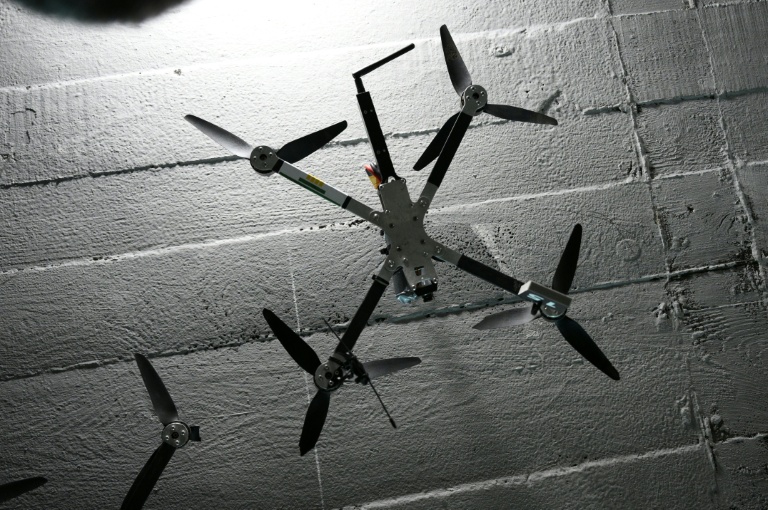
BERLIN — On the solemn fourth anniversary of Russia’s full-scale invasion of Ukraine, a new permanent exhibition opened on Tuesday within the thick, graffiti-covered walls of a former Nazi bunker in Berlin. The “Berlin Story Bunker” museum has transformed its space to showcase the “physical reality” of the war, aiming to galvanize continued German and European support for Kyiv .
Housed in a massive air-raid shelter built in 1943 to protect civilians from Allied bombs, the new Ukrainian section adds a contemporary layer to the museum’s existing permanent exhibitions, which focus on the rise of Nazism and German history from 1945 to the present day . The juxtaposition is intentional, drawing a direct line between historical and contemporary aggression in Europe.
The “Physical Reality” of War
Walking into the exhibition, visitors are confronted with the stark remnants of modern warfare. About 20 wrecks of Russian drones hang ominously from the ceiling. Below them sits a gutted car, its metal carcass torn apart by a bomb . This vehicle is not a prop; it was transported from Kherson, a southern Ukrainian city that, despite being liberated from Russian occupation in 2022, remains under constant shelling .
Other artifacts include wreckage from a Russian helicopter shot down over Snake Island and debris from Iranian-made “Shahed” drones that have terrorized Ukrainian cities . The exhibition aims to bridge the distance between the front line and the German home front. “Visitors to Germany can’t really imagine what war is like,” museum curator Wieland Giebel told AFP. “We want to show it to them” .
A Bridge Between Histories
The curators are leveraging the bunker’s own dark history to create a powerful emotional resonance. Personal testimonies featured in the exhibit seek to connect with German visitors on a deeply human level. One striking quote comes from Roman Schwarzman, a Holocaust survivor from Odesa: “Hitler wanted to kill me because I am Jewish; Putin wants to kill me because I am Ukrainian” .
This theme is carried through in the exhibition’s narrative framing, which places the war in Ukraine within a broader context of “Russian imperialism.” Information panels link it to the Soviet Union’s 1939 invasion of eastern Poland, the crushing of the Prague Spring in 1968, and even Russia’s military intervention in Syria . The message, as articulated by former Ukrainian Deputy Defense Minister Hanna Maliar at the opening, is a warning against historical repetition. “If history repeats itself, it means Europe is again making the same mistakes,” she said, explicitly drawing parallels between Hitler and Putin .
Ukraine as “Europe’s Shield”
The opening ceremony on Monday was attended by Hanna Maliar, who welcomed Germany’s “military, political, and also cultural support.” She stressed that such backing is critical, framing Ukraine’s fight as a defensive barrier for the entire continent: “Ukraine is the shield of Europe” .
This message resonates deeply in Germany, which is Ukraine’s largest European weapons supplier and hosts approximately 1.3 million Ukrainian refugees . However, the exhibition opens against a backdrop of domestic debate. While a majority of Germans support Ukraine, arms deliveries remain a divisive issue in a country with a strong pacifist tradition stemming from its Nazi past. The rise of the Russia-friendly, far-right Alternative for Germany (AfD) party adds another layer of political complexity .
Giebel is undeterred, expressing determination that Ukraine should continue to receive support, particularly through air defense weapons . The private museum has a history of provocative, pro-Ukraine gestures; on the first anniversary of the war, it famously towed the wreck of a destroyed tank from the outskirts of Kyiv and displayed it directly in front of the Russian embassy in Berlin .
With this new permanent exhibition, the Berlin Story Bunker cements its role not just as a memorial to the past, but as an active participant in the political and cultural discourse of Europe’s present, using the ghosts of 20th-century fascism to tell the story of 21st-century conflict.