Connect with us

News

Deadly Indonesia floods force a deforestation reckoning

Published

on

Deadly Indonesia floods force a deforestation reckoning

The death toll had just surpassed 1,200 when Indonesian President Prabowo Subianto stood before world leaders at the World Economic Forum in January and made an unexpected announcement. His administration had revoked the licences of 28 corporations operating across more than one million hectares of forestland, citing widespread violations in protected areas .

“It is the boldest, most daring forest law-enforcement effort in the history of Indonesia,” Prabowo declared .

The move marks a significant shift for a nation long criticised for permitting deforestation that environmentalists have warned about for decades. But the catalyst was devastating: Tropical Cyclone Senyar, which swept through Sumatra in late 2025, triggering floods and landslides that killed more than 1,200 people, displaced over 113,000 others, and damaged more than 175,000 houses across Aceh, North Sumatra and West Sumatra provinces .

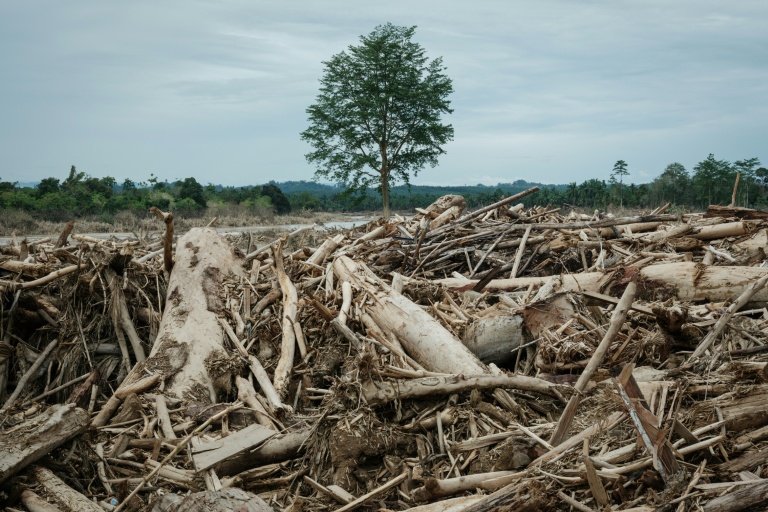
What made the disaster different from previous floods was the official acknowledgment that extreme weather alone was not to blame. Government investigators from the Bandung Institute of Technology found large logs carried by floodwaters that had been cut with machine saws rather than broken naturally—clear evidence that deforestation in upstream catchment areas had fatally weakened the landscape’s natural defences .

“We must protect our environment, our nature, and avoid illegal logging,” Prabowo told survivors at an evacuation post in Aceh Tamiang District in December. “I want all regional governments to enhance vigilance and step up environmental monitoring” .

A ‘polluter pays’ reckoning

The scale of the government’s response has been unprecedented. Beyond permit revocations, environment minister Hanif Faisol Nurofiq announced in January that six companies were being sued for more than 4.8 trillion rupiah (approximately US$366 million) in damages, seeking both fines and ecosystem restoration costs .

“Any company getting profits by damaging the ecosystem must be held fully responsible for restoring it,” Nurofiq said, affirming what he termed the “polluter pays” principle .

Environmental audits are now underway for more than 100 companies operating across the three affected provinces, spanning mining, energy, plantation and infrastructure sectors. Even licensed operations are not exempt. “Compliance with permits does not exempt a company if its operations violate environmental safeguards and result in serious damage,” Nurofiq warned .

Eight companies operating in and around the ecologically fragile Batang Toru ecosystem—home to the critically endangered Tapanuli orangutan, the world’s rarest great ape—have already been ordered to cease operations pending investigation .

Corruption and the roots of destruction

For Transparency International, the disaster confirms what research has long suggested: corruption has systematically undermined Indonesia’s environmental protections. The organisation found that nearly 60 percent of Indonesian parliament members are affiliated with businesses, including palm oil and mining interests that have benefited from permissive land policies .

“Evidence from multiple independent sources points to a clear pattern: large-scale deforestation has weakened the ability of Sumatra’s natural hydrological systems to absorb and regulate water, instead increasing runoff, sedimentation and the severity of floods during extreme rainfall,” said Maíra Martini, CEO of Transparency International .

The scale of forest loss is staggering. Between 2001 and 2024, Sumatra lost 4.4 million hectares of forest—an area larger than Switzerland . Greenpeace Indonesia reports that most river basins on the island have fallen into critical condition, with forest cover shrinking to less than 30 percent of the total area .

The Batang Toru river basin alone has lost 70,000 hectares of catchment area to deforestation since 1990. A further 94,000 hectares have been converted for industrial uses including mining, palm oil and power generation, contributing to an estimated 31.6 million tonnes of annual erosion .

The Tesso Nilo experiment

Nowhere are the complexities of Indonesia’s deforestation crisis more visible than in Tesso Nilo National Park in Riau province. Established in 2004 and expanded in 2009 to protect critical habitat for Sumatran elephants and tigers, the park has since lost 78 percent of its old-growth forest—largely to smallholder oil palm farms established by migrant families .

The government’s response has been radical. Since last year, officials working under a new nationwide forestry task force have begun relocating hundreds of farming families living inside the park, framing the policy around efforts to save Domang, a critically endangered Sumatran elephant calf .

“This activity will serve as a model for other locations in restoring national parks,” forestry minister Raja Juli Antoni said .

But the operation has proven fraught. When government officers first entered the park, they retreated after their forest command centre came under attack. The government responded by deploying 30 soldiers from a newly established military detachment, along with additional rangers and a rapid-reaction team .

Human rights concerns have also emerged. The National Commission on Human Rights raised alarms after many residents opposing relocation told investigators they had lived in the area for more than a decade and had not been offered compensation or resettlement options . By late November, the government reported seizing several thousand hectares of illegal palm oil plantations and razing encampments used by workers .

The seized land has been consolidated under a hastily assembled state-owned holding company, PT Agrinas Palma Nusantara, which has become, almost overnight, the world’s largest palm oil company .

Questions about what comes next

Despite the强硬 rhetoric, environmentalists remain cautious about whether the government’s actions will translate into lasting change.

“Revoking permits is not immediately a win,” said Panut Hadisiswoyo, a conservationist and orangutan specialist. “The idea of revoking should be to stop the devastation, but by continuing these operations, this means industry will continue in this vulnerable area” .

Conservationists have lobbied for a moratorium on development in Batang Toru, where Tapanuli orangutans suffered first habitat loss and then the flood disaster. Using satellite data and pre-existing population information, experts have calculated that nearly 60 animals may have been killed in what they termed an “extinction-level event” for the species, now estimated at only around 800 individuals .

Others worry that revoking permits and seizing operations has disrupted plans to audit and investigate companies to determine their precise responsibility for the disaster. And so far, the government has not outlined clear plans for forest recovery and environmental remediation .

“It’s not only revocation but it also has to include remediation, taking responsibility for the destruction,” said Timer Manurung, executive director of Indonesian environmental group Auriga Nusantara .

There are also questions about whether transferring operations to state control will improve environmental outcomes. “It’s a concern that the state-backed takeover may not guarantee better environmental practices, and that production may be prioritised over conservation,” said Amanda Hurowitz of Mighty Earth. “We have yet to see any plans” .

A ‘blessing in disguise’?

What gives some observers hope is a shift in public consciousness. The scale of the disaster—and the visibility of the government’s response—has dramatically raised awareness of deforestation’s consequences among ordinary Indonesians .

For Timer, this represents “a blessing in disguise”—a “very significant rising awareness” that could build lasting political support for environmental protection .

At the World Economic Forum, Prabowo framed the issue in stark terms, speaking of “an economic system driven by greed” and promising strengthened law enforcement to establish a more just economic order .

Whether those words translate into sustained action will determine not only the fate of Sumatra’s remaining forests, but the safety of the millions of Indonesians who live downstream from them.

The government has announced ambitious plans to reforest 12 million hectares nationwide . In Tesso Nilo, seedlings of rain tree, mahogany, garlic tree and even durian are now growing in the national park nursery. But officials’ greatest hope rests on ironwood, whose deep roots promise genuine resilience against erosion—a stark contrast to the oil palms whose shallow roots have left hillsides across Sumatra vulnerable to collapse .

For survivors still rebuilding their lives after the floods, the question is whether this reckoning will prove lasting—or merely another cycle of outrage followed by inaction until the next disaster strikes.


Continue Reading
Click to comment

Leave a Reply

Your email address will not be published. Required fields are marked *

News

How Message Center Signs Are Revolutionizing Communication Across Industries

Published

on

By

Key Takeaways

  • Message center signs enhance real-time communication in various settings.
  • They improve safety, engagement, and information dissemination.
  • Integration with digital platforms allows for dynamic content updates.

Table of Contents

  1. Introduction
  2. Enhancing Safety and Emergency Communication
  3. Boosting Engagement and Information Dissemination
  4. Integration with Digital Platforms
  5. Applications in Educational Institutions
  6. Impact on Customer Experience in Retail
  7. Future Trends in Message Center Signs
  8. Conclusion

Introduction

Efficient and reliable communication is more essential today than ever. As organizations and communities seek to reach wider audiences instantly, digital message center signs have become fundamental tools. These electronic displays deliver real-time information, alerts, and announcements, helping businesses, schools, and public facilities connect with people quickly and effectively. For those seeking robust communication solutions, exploring a message center sign in Portland, OR can be an impactful first step in transforming how they share information.

Whether for ensuring public safety or boosting customer engagement, message center signs provide unmatched flexibility compared to traditional signage. Their dynamic digital capabilities enable organizations to present up-to-date content tailored for specific audiences or situations. As technology advances, digital signage continues to set new standards for clarity, visibility, and responsiveness.

These signs excel in both indoor and outdoor environments, making them invaluable assets for everything from traffic updates on highways to emergency alerts in schools. The growing adoption of message center signs illustrates their importance in today’s communication strategies, seamlessly merging technology with the need for reliable, rapid outreach. Emphasizing their role in safety, engagement, and operational efficiency, message center signs reflect a broader trend towards digital transformation across public and private sectors. The ability to update content in seconds means critical updates, event notices, or even promotional content can be broadcast instantly, ensuring audiences are always informed.

Enhancing Safety and Emergency Communication

The safety of people in public settings, workplaces, and educational institutions relies on fast, clear communication during emergencies. Digital message center signs offer a powerful solution by integrating with emergency alert systems to broadcast warnings, evacuation routes, or shelter-in-place instructions instantly. Schools, for example, have adopted these signs as a primary method for distributing safety messages. Message center signs help reduce response times in crises, ensuring that everyone receives the same critical information simultaneously. In addition to public safety, these signs provide traffic and construction updates for commuters, minimizing risk near hazardous zones by keeping motorists alert and informed.

Boosting Engagement and Information Dissemination

Message center signs are more than emergency tools. Their greatest advantage lies in the ability to share vivid, dynamic content that captures attention far better than static displays. Institutions use these signs to announce upcoming events, share schedules, or highlight achievements, creating a sense of community and shared engagement. Research from the Harvard Business Review suggests that visual communication tools increase engagement and retention, supporting this trend toward digital signage. In corporate environments, digital message centers are used to disseminate policy updates, meeting reminders, and other important messages, ensuring that even remote or mobile employees remain in the loop. Retailers have harnessed this technology to promote daily deals and interactive content, using visual appeal and personalization to drive customer interaction and sales.

Integration with Digital Platforms

Modern message center signs are designed to work hand in hand with cloud-based control systems and integrated software platforms. This approach empowers organizations to manage content remotely, schedule messages in advance, and push simultaneous updates to multiple locations. For chain retailers or large campuses, centralized content management ensures uniform messaging and reduces the risk of outdated information being displayed. The shift toward managing digital signs via web-based dashboards or mobile apps reflects the broader trend of digital convergence across many industries. No longer static or siloed, communication is delivered in sync with digital strategies, enhancing responsiveness and streamlining operations.

Applications in Educational Institutions

Schools, colleges, and universities have been leaders in adopting message center technology for campus communication. Administrators can use these systems to alert students and staff to schedule changes, weather-related closures, and emergency procedures, all in real time. In addition to safety messaging, these displays are used to celebrate student accomplishments, promote campus events, and provide directory information to visitors, supporting a vibrant, connected campus life.

Impact on Customer Experience in Retail

Retailers recognize that customer attention is a valuable commodity. Message center signs enable stores to showcase targeted promotions, direct shopper flow during peak hours, and highlight loyalty offers. The flexibility to adapt messages based on time, events, or weather conditions creates personalized experiences that drive purchase decisions.

Future Trends in Message Center Signs

Looking to the future, ongoing advancements in display technology, connectivity, and interoperability are transforming what is possible for message center signs. Artificial intelligence is being employed to analyze audience patterns and deliver relevant content at optimal times. Integration with mobile devices and social media networks is creating increasingly interactive experiences, as signs draw on real-time user feedback and preferences to refine their messaging. Sustainability also plays a growing role, with energy-efficient LED designs and automated brightness controls helping organizations reduce costs while delivering powerful communication. The journey of digital messaging is only accelerating, shaping a future where every message can be precisely timed, highly visible, and deeply engaging.

Conclusion

Message center signs represent a leap forward in communication technology for organizations of all sizes. Their versatility in delivering real-time, targeted content boosts public safety, enhances engagement, and drives operational efficiency. As these systems integrate more closely with digital platforms and data-driven strategies, they will remain at the forefront of modern communication, helping businesses, schools, and communities connect in smarter, more impactful ways.

Continue Reading

News

Понуде: A Complete Guide to Finding the Best Deals and Offers

Published

on

By

Понуде: A Complete Guide to Finding the Best Deals and Offers

Introduction Понуде

In today’s fast-paced digital world, Понуде everyone loves a good deal. Whether shopping online, booking travel, purchasing electronics, or subscribing to services, people constantly search for ways to save money. This is where понуде come into play. The word “понуде” translates to offers, deals, or promotions, and it represents opportunities for consumers to obtain products or services at reduced prices or with added benefits.

From seasonal discounts to exclusive online promotions, понуде have become an essential part of modern commerce. Businesses use them to attract customers, while shoppers use them to maximize value and stretch their budgets further.

This guide explores everything you need to know about понуде, including their types, benefits, how to find the best offers, and tips for avoiding common pitfalls.

What Are Понуде?

Понуде are special incentives provided by businesses to encourage purchases. These can include:

  • Price discounts
  • Buy-one-get-one-free promotions
  • Limited-time offers
  • Cashback rewards
  • Coupon codes
  • Loyalty program rewards
  • Bundle deals

The primary goal of these offers is to create value for customers while increasing sales for businesses.

Why Are Понуде Important?

For Consumers

Consumers benefit from понуде because they:

  • Save money
  • Provide access to premium products at lower costs
  • Encourage smart shopping
  • Offer additional perks and rewards

For Businesses

Businesses use offers to:

  • Increase sales
  • Attract new customers
  • Retain existing customers
  • Promote new products
  • Clear inventory

This creates a win-win situation where both parties benefit.

Types of Понуде

1. Discount Offers

Discount offers are the most common type of promotion. Businesses reduce the original price by a specific percentage or amount.

Examples include:

  • 10% off
  • 25% discount
  • Save $50 on purchases over $500

2. Seasonal Promotions

These offers occur during special periods such as:

  • Summer sales
  • Winter promotions
  • Black Friday
  • Cyber Monday
  • Holiday sales

Seasonal promotions often provide some of the largest discounts available throughout the year.

3. Flash Sales

Flash sales are short-term promotions designed to create urgency.

Characteristics include:

  • Limited duration
  • Limited stock
  • Significant discounts

Customers often act quickly to avoid missing out.

4. Cashback Offers

Cashback promotions return a percentage of the purchase price to customers.

Benefits include:

  • Future savings
  • Additional purchasing power
  • Increased customer loyalty

5. Bundle Deals

Bundle deals combine multiple products or services at a lower price than buying them separately.

For example:

  • Smartphone plus accessories package
  • Software suite bundles
  • Family travel packages

6. Loyalty Program Offers

Businesses reward repeat customers through loyalty programs.

Rewards may include:

  • Points
  • Exclusive discounts
  • Free products
  • Early access to sales

How to Find the Best Понуде

Compare Prices

Before making a purchase, compare prices across multiple sellers.

This helps identify:

  • Genuine discounts
  • Competitive pricing
  • Better alternatives

Subscribe to Newsletters

Many companies provide exclusive offers to subscribers.

Benefits include:

  • Early access to promotions
  • Special discount codes
  • Personalized recommendations

Use Coupon Websites

Coupon websites aggregate promotional codes and discounts from various retailers.

These platforms can help shoppers save additional money during checkout.

Follow Brands on Social Media

Businesses often announce limited-time offers through social media channels.

Following favorite brands can provide:

  • Instant notifications
  • Exclusive promotions
  • Giveaway opportunities

Shop During Major Sales Events

Some of the best понуде appear during major shopping events such as:

  • Black Friday
  • Cyber Monday
  • New Year sales
  • End-of-season clearance events

Advantages of Using Понуде

Financial Savings

The most obvious benefit is reduced spending.

Better Value

Offers allow consumers to obtain more products or services for the same budget.

Access to Premium Products

Discounts often make premium brands more affordable.

Opportunity to Try New Products

Promotions encourage customers to experiment with products they might not otherwise purchase.

Common Mistakes to Avoid

Buying Unnecessary Items

A discount is only valuable if the product is actually needed.

Ignoring Terms and Conditions

Always read the fine print to understand:

  • Expiration dates
  • Eligibility requirements
  • Usage restrictions

Falling for Fake Discounts

Some retailers artificially inflate prices before applying discounts.

Always compare the original price with market rates.

Missing Expiration Dates

Many promotions are time-sensitive. Delaying a purchase may result in losing the offer.

The Role of Technology in Modern Понуде

Technology has transformed how offers are delivered and redeemed.

Popular technologies include:

  • Mobile apps
  • Digital coupons
  • Personalized recommendations
  • Artificial intelligence
  • Email marketing automation

These innovations help businesses provide more relevant and effective promotions.

Future Trends in Понуде

The future of offers is expected to include:

Personalized Promotions

AI-driven systems will create customized deals based on shopping behavior.

Real-Time Discounts

Prices may adjust dynamically depending on demand and inventory.

Mobile-First Offers

More promotions will be optimized for smartphones and mobile applications.

Enhanced Loyalty Programs

Businesses will continue improving customer rewards through advanced loyalty systems.

Tips for Maximizing Savings

To get the most from понуде:

  1. Set a shopping budget.
  2. Compare prices before buying.
  3. Use coupon codes whenever available.
  4. Join loyalty programs.
  5. Track major sales events.
  6. Avoid impulse purchases.
  7. Read all promotional details carefully.

Conclusion

Понуде play a vital role in modern shopping by helping consumers save money while allowing businesses to attract and retain customers. From discounts and cashback rewards to seasonal promotions and loyalty programs, offers create valuable opportunities for both buyers and sellers.

By understanding how different types of понуде work and applying smart shopping strategies, consumers can maximize their savings and make more informed purchasing decisions. As technology continues to evolve, offers will become even more personalized, convenient, and beneficial, making them an essential component of the future retail landscape.

Frequently Asked Questions (FAQs)

What does “понуде” mean?

Понуде is a Serbian term that translates to offers, deals, promotions, or special discounts.

Where can I find the best понуде?

You can find them through online stores, newsletters, coupon websites, mobile apps, and major sales events.

Are all offers worth taking?

No. An offer is only valuable if it provides genuine savings on something you actually need.

What is the difference between a discount and cashback offer?

A discount reduces the purchase price immediately, while cashback returns part of the money after the purchase.

How can I avoid fake promotions?

Compare prices across multiple retailers and check historical pricing whenever possible.

Do loyalty programs provide good offers?

Yes. Many loyalty programs offer exclusive discounts, rewards points, and special member-only promotions.

Continue Reading

News

The Fascinating History of Peitner

Published

on

By

Peitner

Names often carry stories that connect generations, cultures, and historical traditions. One such intriguing name is Peitner. Although not widely discussed in mainstream historical texts, Peitner appears to have deep roots in European heritage and reflects the complex evolution of family names across centuries. Exploring the history of Peitner reveals insights into migration, regional identity, and the development of surnames in Europe.

Origins of the Name Peitner

The surname Peitner is believed to have Germanic origins, likely emerging from regions influenced by the German language and culture. Many surnames in Central Europe developed from professions, geographic locations, or personal characteristics. Peitner may have evolved from a regional dialect or occupational reference used to identify individuals within local communities.

Historically, surnames became more common in Europe during the Middle Ages when growing populations made it necessary to distinguish between people with similar first names. Families began adopting permanent last names that were passed down through generations.

Geographic Roots in Central Europe

The Peitner name is most commonly associated with parts of Central Europe, particularly areas historically connected to German-speaking populations. Regions such as Austria, Germany, and northern Italy have historically shared cultural and linguistic influences that shaped surnames like Peitner.

In mountainous regions such as South Tyrol in northern Italy, for example, many families carry Germanic surnames due to centuries of historical connections with Austrian and German territories.

Possible Meaning Behind the Name

Although the exact meaning of Peitner is not universally documented, linguistic analysis suggests it may be connected to:

  • Regional place names where early families lived
  • Occupational roles tied to farming or local trades
  • Personal identifiers related to family lineage or characteristics

Many European surnames developed through slight spelling variations over time, especially as languages evolved and communities migrated.

Historical Migration and Spread

Like many European surnames, the Peitner name likely spread through migration. During the 18th, 19th, and early 20th centuries, large numbers of Europeans moved across continents in search of economic opportunities and new lives.

Families with the Peitner surname may have migrated to countries such as:

  • United States
  • Canada
  • Australia

These migrations helped spread the name beyond its original European roots, creating new branches of the family across the world.

Cultural Identity and Family Heritage

For many families, a surname like Peitner represents more than just a name—it reflects a shared heritage and identity. Family names preserve connections to ancestors, historical regions, and cultural traditions.

Genealogy enthusiasts often explore surnames to trace their family histories. Studying records such as birth certificates, immigration documents, and church archives can help uncover the journeys of families carrying the Peitner name.

Modern Presence of the Peitner Name

Today, the Peitner surname can still be found in several parts of Europe and in communities around the world. Advances in genealogy databases and DNA ancestry testing have made it easier for individuals to trace their lineage and connect with distant relatives.

Online platforms now allow people with shared surnames to discover family connections that may have been separated for generations.

The Importance of Preserving Family History

Understanding the history of surnames like Peitner helps preserve cultural heritage. By researching family names, people can gain valuable insight into historical migrations, social structures, and cultural traditions that shaped their ancestors’ lives.

Documenting these stories ensures that future generations remain connected to their roots.

Conclusion

The history of Peitner offers a fascinating glimpse into the evolution of European surnames and the movement of families across continents. With likely roots in Central Europe and connections to Germanic linguistic traditions, the name reflects centuries of cultural exchange and migration. While its precise origins may still invite further research, the story of Peitner highlights how surnames serve as living links between past and present, carrying the legacy of families through time.

FAQs

1. What is the origin of the surname Peitner?
Peitner is believed to have Germanic origins and is commonly associated with regions in Central Europe.

2. In which countries is the Peitner name found?
The surname has historical connections to Austria, Germany, and northern Italy, with descendants also living in countries like United States and Canada.

3. What does the name Peitner mean?
Its exact meaning is uncertain, but it may relate to geographic locations, occupations, or family lineage.

4. How can someone research the Peitner family history?
Genealogical records, historical archives, and ancestry databases can help individuals trace their Peitner lineage.

5. Why are surnames like Peitner important historically?
Surnames preserve family heritage and provide insight into migration patterns, cultural traditions, and historical identities.

Continue Reading

Trending