Connect with us

News

Deadly Indonesia floods force a deforestation reckoning

Published

on

Deadly Indonesia floods force a deforestation reckoning

The death toll had just surpassed 1,200 when Indonesian President Prabowo Subianto stood before world leaders at the World Economic Forum in January and made an unexpected announcement. His administration had revoked the licences of 28 corporations operating across more than one million hectares of forestland, citing widespread violations in protected areas .

“It is the boldest, most daring forest law-enforcement effort in the history of Indonesia,” Prabowo declared .

The move marks a significant shift for a nation long criticised for permitting deforestation that environmentalists have warned about for decades. But the catalyst was devastating: Tropical Cyclone Senyar, which swept through Sumatra in late 2025, triggering floods and landslides that killed more than 1,200 people, displaced over 113,000 others, and damaged more than 175,000 houses across Aceh, North Sumatra and West Sumatra provinces .

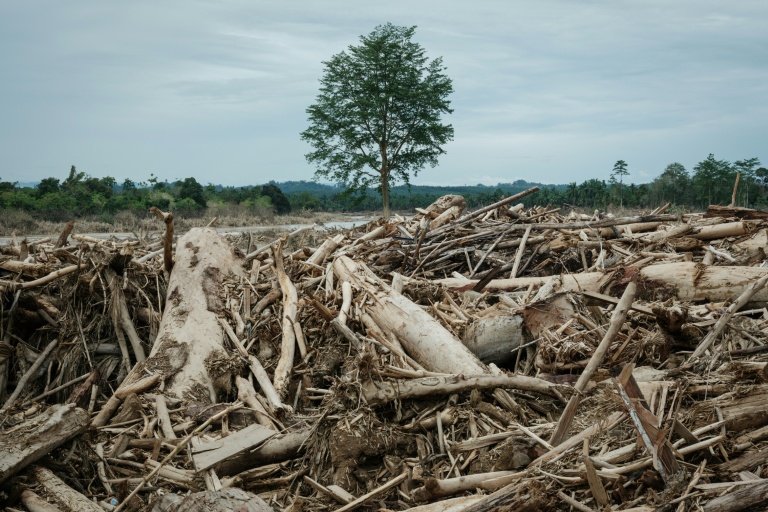
What made the disaster different from previous floods was the official acknowledgment that extreme weather alone was not to blame. Government investigators from the Bandung Institute of Technology found large logs carried by floodwaters that had been cut with machine saws rather than broken naturally—clear evidence that deforestation in upstream catchment areas had fatally weakened the landscape’s natural defences .

“We must protect our environment, our nature, and avoid illegal logging,” Prabowo told survivors at an evacuation post in Aceh Tamiang District in December. “I want all regional governments to enhance vigilance and step up environmental monitoring” .

A ‘polluter pays’ reckoning

The scale of the government’s response has been unprecedented. Beyond permit revocations, environment minister Hanif Faisol Nurofiq announced in January that six companies were being sued for more than 4.8 trillion rupiah (approximately US$366 million) in damages, seeking both fines and ecosystem restoration costs .

“Any company getting profits by damaging the ecosystem must be held fully responsible for restoring it,” Nurofiq said, affirming what he termed the “polluter pays” principle .

Environmental audits are now underway for more than 100 companies operating across the three affected provinces, spanning mining, energy, plantation and infrastructure sectors. Even licensed operations are not exempt. “Compliance with permits does not exempt a company if its operations violate environmental safeguards and result in serious damage,” Nurofiq warned .

Eight companies operating in and around the ecologically fragile Batang Toru ecosystem—home to the critically endangered Tapanuli orangutan, the world’s rarest great ape—have already been ordered to cease operations pending investigation .

Corruption and the roots of destruction

For Transparency International, the disaster confirms what research has long suggested: corruption has systematically undermined Indonesia’s environmental protections. The organisation found that nearly 60 percent of Indonesian parliament members are affiliated with businesses, including palm oil and mining interests that have benefited from permissive land policies .

“Evidence from multiple independent sources points to a clear pattern: large-scale deforestation has weakened the ability of Sumatra’s natural hydrological systems to absorb and regulate water, instead increasing runoff, sedimentation and the severity of floods during extreme rainfall,” said Maíra Martini, CEO of Transparency International .

The scale of forest loss is staggering. Between 2001 and 2024, Sumatra lost 4.4 million hectares of forest—an area larger than Switzerland . Greenpeace Indonesia reports that most river basins on the island have fallen into critical condition, with forest cover shrinking to less than 30 percent of the total area .

The Batang Toru river basin alone has lost 70,000 hectares of catchment area to deforestation since 1990. A further 94,000 hectares have been converted for industrial uses including mining, palm oil and power generation, contributing to an estimated 31.6 million tonnes of annual erosion .

The Tesso Nilo experiment

Nowhere are the complexities of Indonesia’s deforestation crisis more visible than in Tesso Nilo National Park in Riau province. Established in 2004 and expanded in 2009 to protect critical habitat for Sumatran elephants and tigers, the park has since lost 78 percent of its old-growth forest—largely to smallholder oil palm farms established by migrant families .

The government’s response has been radical. Since last year, officials working under a new nationwide forestry task force have begun relocating hundreds of farming families living inside the park, framing the policy around efforts to save Domang, a critically endangered Sumatran elephant calf .

“This activity will serve as a model for other locations in restoring national parks,” forestry minister Raja Juli Antoni said .

But the operation has proven fraught. When government officers first entered the park, they retreated after their forest command centre came under attack. The government responded by deploying 30 soldiers from a newly established military detachment, along with additional rangers and a rapid-reaction team .

Human rights concerns have also emerged. The National Commission on Human Rights raised alarms after many residents opposing relocation told investigators they had lived in the area for more than a decade and had not been offered compensation or resettlement options . By late November, the government reported seizing several thousand hectares of illegal palm oil plantations and razing encampments used by workers .

The seized land has been consolidated under a hastily assembled state-owned holding company, PT Agrinas Palma Nusantara, which has become, almost overnight, the world’s largest palm oil company .

Questions about what comes next

Despite the强硬 rhetoric, environmentalists remain cautious about whether the government’s actions will translate into lasting change.

“Revoking permits is not immediately a win,” said Panut Hadisiswoyo, a conservationist and orangutan specialist. “The idea of revoking should be to stop the devastation, but by continuing these operations, this means industry will continue in this vulnerable area” .

Conservationists have lobbied for a moratorium on development in Batang Toru, where Tapanuli orangutans suffered first habitat loss and then the flood disaster. Using satellite data and pre-existing population information, experts have calculated that nearly 60 animals may have been killed in what they termed an “extinction-level event” for the species, now estimated at only around 800 individuals .

Others worry that revoking permits and seizing operations has disrupted plans to audit and investigate companies to determine their precise responsibility for the disaster. And so far, the government has not outlined clear plans for forest recovery and environmental remediation .

“It’s not only revocation but it also has to include remediation, taking responsibility for the destruction,” said Timer Manurung, executive director of Indonesian environmental group Auriga Nusantara .

There are also questions about whether transferring operations to state control will improve environmental outcomes. “It’s a concern that the state-backed takeover may not guarantee better environmental practices, and that production may be prioritised over conservation,” said Amanda Hurowitz of Mighty Earth. “We have yet to see any plans” .

A ‘blessing in disguise’?

What gives some observers hope is a shift in public consciousness. The scale of the disaster—and the visibility of the government’s response—has dramatically raised awareness of deforestation’s consequences among ordinary Indonesians .

For Timer, this represents “a blessing in disguise”—a “very significant rising awareness” that could build lasting political support for environmental protection .

At the World Economic Forum, Prabowo framed the issue in stark terms, speaking of “an economic system driven by greed” and promising strengthened law enforcement to establish a more just economic order .

Whether those words translate into sustained action will determine not only the fate of Sumatra’s remaining forests, but the safety of the millions of Indonesians who live downstream from them.

The government has announced ambitious plans to reforest 12 million hectares nationwide . In Tesso Nilo, seedlings of rain tree, mahogany, garlic tree and even durian are now growing in the national park nursery. But officials’ greatest hope rests on ironwood, whose deep roots promise genuine resilience against erosion—a stark contrast to the oil palms whose shallow roots have left hillsides across Sumatra vulnerable to collapse .

For survivors still rebuilding their lives after the floods, the question is whether this reckoning will prove lasting—or merely another cycle of outrage followed by inaction until the next disaster strikes.


Continue Reading
Click to comment

Leave a Reply

Your email address will not be published. Required fields are marked *

News

The Fascinating History of Peitner

Published

on

By

Peitner

Names often carry stories that connect generations, cultures, and historical traditions. One such intriguing name is Peitner. Although not widely discussed in mainstream historical texts, Peitner appears to have deep roots in European heritage and reflects the complex evolution of family names across centuries. Exploring the history of Peitner reveals insights into migration, regional identity, and the development of surnames in Europe.

Origins of the Name Peitner

The surname Peitner is believed to have Germanic origins, likely emerging from regions influenced by the German language and culture. Many surnames in Central Europe developed from professions, geographic locations, or personal characteristics. Peitner may have evolved from a regional dialect or occupational reference used to identify individuals within local communities.

Historically, surnames became more common in Europe during the Middle Ages when growing populations made it necessary to distinguish between people with similar first names. Families began adopting permanent last names that were passed down through generations.

Geographic Roots in Central Europe

The Peitner name is most commonly associated with parts of Central Europe, particularly areas historically connected to German-speaking populations. Regions such as Austria, Germany, and northern Italy have historically shared cultural and linguistic influences that shaped surnames like Peitner.

In mountainous regions such as South Tyrol in northern Italy, for example, many families carry Germanic surnames due to centuries of historical connections with Austrian and German territories.

Possible Meaning Behind the Name

Although the exact meaning of Peitner is not universally documented, linguistic analysis suggests it may be connected to:

  • Regional place names where early families lived
  • Occupational roles tied to farming or local trades
  • Personal identifiers related to family lineage or characteristics

Many European surnames developed through slight spelling variations over time, especially as languages evolved and communities migrated.

Historical Migration and Spread

Like many European surnames, the Peitner name likely spread through migration. During the 18th, 19th, and early 20th centuries, large numbers of Europeans moved across continents in search of economic opportunities and new lives.

Families with the Peitner surname may have migrated to countries such as:

  • United States
  • Canada
  • Australia

These migrations helped spread the name beyond its original European roots, creating new branches of the family across the world.

Cultural Identity and Family Heritage

For many families, a surname like Peitner represents more than just a name—it reflects a shared heritage and identity. Family names preserve connections to ancestors, historical regions, and cultural traditions.

Genealogy enthusiasts often explore surnames to trace their family histories. Studying records such as birth certificates, immigration documents, and church archives can help uncover the journeys of families carrying the Peitner name.

Modern Presence of the Peitner Name

Today, the Peitner surname can still be found in several parts of Europe and in communities around the world. Advances in genealogy databases and DNA ancestry testing have made it easier for individuals to trace their lineage and connect with distant relatives.

Online platforms now allow people with shared surnames to discover family connections that may have been separated for generations.

The Importance of Preserving Family History

Understanding the history of surnames like Peitner helps preserve cultural heritage. By researching family names, people can gain valuable insight into historical migrations, social structures, and cultural traditions that shaped their ancestors’ lives.

Documenting these stories ensures that future generations remain connected to their roots.

Conclusion

The history of Peitner offers a fascinating glimpse into the evolution of European surnames and the movement of families across continents. With likely roots in Central Europe and connections to Germanic linguistic traditions, the name reflects centuries of cultural exchange and migration. While its precise origins may still invite further research, the story of Peitner highlights how surnames serve as living links between past and present, carrying the legacy of families through time.

FAQs

1. What is the origin of the surname Peitner?
Peitner is believed to have Germanic origins and is commonly associated with regions in Central Europe.

2. In which countries is the Peitner name found?
The surname has historical connections to Austria, Germany, and northern Italy, with descendants also living in countries like United States and Canada.

3. What does the name Peitner mean?
Its exact meaning is uncertain, but it may relate to geographic locations, occupations, or family lineage.

4. How can someone research the Peitner family history?
Genealogical records, historical archives, and ancestry databases can help individuals trace their Peitner lineage.

5. Why are surnames like Peitner important historically?
Surnames preserve family heritage and provide insight into migration patterns, cultural traditions, and historical identities.

Continue Reading

News

French boats set sail to join Gaza aid flotilla

Published

on

By

French boats set sail to join Gaza aid flotilla

MARSEILLE — Around 20 French boats departed from the southern port city of Marseille on Saturday, April 4, 2026, to join an international humanitarian flotilla aiming to break Israel’s naval blockade and deliver aid to Gaza. The vessels, part of the Global Sumud Flotilla’s “2026 Spring Mission,” set off shortly after 5:00 PM local time to a round of applause, songs, and farewells from about a thousand supporters waving Palestinian flags.

The flotilla’s journey includes a planned week-long stopover in southern Italy for “non-violence training”. It will then link up with the main international fleet of roughly 100 boats, which is scheduled to depart from Barcelona on April 12 and head toward Gaza around April 20. Organizers emphasize that their mission is fundamentally political and symbolic, aimed at drawing international attention to what they describe as a dire humanitarian crisis in Gaza.

“The goal is to give Palestine more visibility,” explained Manon, a crew member, acknowledging the challenges of maintaining public focus on the issue amid competing international crises.

The French boats have been prepared over several weeks and are adorned with powerful symbols of Palestinian identity and resistance. Their sails feature traditional Palestinian tatreez embroidery motifs alongside images of Handala, the iconic barefoot refugee child created by cartoonist Naji al-Ali, which has become a global emblem of Palestinian dispossession and the right of return.

Each boat in the French contingent represents a different theme, including prisoners, children, and medical personnel, all of whom activists say are systematically targeted in Gaza.

The departure from Marseille unfolded against the backdrop of a rapidly deteriorating humanitarian situation in Gaza. Organizers warned that famine is again becoming a serious risk due to the ongoing closure of border crossingsIsrael has maintained a blockade on Gaza, home to nearly 2.4 million Palestinians, for almost 18 years, and tightened the siege further in March 2026 by blocking deliveries of food and medicine.

At a pre-departure press conference, Nozha Trabelsi of the Thousand Madleens to Gaza movement dismissed the notion of an active ceasefire as “misleading,” recalling that Israeli naval forces killed ten activists during the 2010 Mavi Marmara incident on a previous Freedom Flotilla. Other speakers called for mass action and sanctions against Israel. “The flotilla alone cannot bring change,” said Esther Le Cordier, another organizer, calling on citizens’ groups and trade unions to organize mass actions on land in support of Palestine.

The 2026 mission follows a similar, larger-scale attempt in late 2025 that was violently suppressed by Israeli forces. That initial flotilla, comprising about 50 boats and including high-profile political figures and activists such as Sweden’s Greta Thunberg, was boarded by the Israeli navy — an action organizers and Amnesty International have called illegal. Crew members were arrested and subsequently expelled by Israel.

In October 2025, Israeli naval forces attacked and seized more than 40 boats belonging to the same humanitarian flotilla, detaining over 450 activists on board. Many survivors later gave harrowing accounts of physical and psychological abuse at the hands of their Israeli captors.

Despite these setbacks, the French contingent is pressing forward, with organizers arguing that increasing the number of vessels improves the likelihood that some may reach their destination. “With 100 boats, we have a chance that some will get through,” said Claude Léostic of the France Palestine Solidarity Association. “If some get through and reach Gaza, symbolically it’s extremely strong — the blockade will have been broken”.

Continue Reading

News

How Executive Coaching Helps Leaders Make Better Strategic Decisions

Published

on

By

Key Takeaways

  • Executive coaching boosts strategic decision-making and self-awareness.
  • Critical thinking and emotional intelligence improve problem-solving and team trust.
  • Confidence and reflective practice help leaders act decisively and learn from experience.
  • Strong communication ensures decisions are understood and supported across the organization.
  • Coaching benefits both leaders and the overall organizational performance.

Introduction

In today’s dynamic business landscape, leaders constantly face complex challenges that require decisive action and strategic thinking. Making informed decisions is crucial not only for organizational growth but also for a company’s long-term viability. Many executives are turning to coaching to refine their decision-making, gain greater perspective, and lead with confidence. In some cases, attending a myers briggs team building workshop or engaging in one-on-one coaching sessions plays a critical role in this developmental journey.

Executive coaching stands out as a multifaceted approach to professional improvement. It allows leaders to unlock new perspectives, overcome limitations, and foster habits that improve decision outcomes. Through tailored support, coaches enable leaders to harness their strengths and address their blind spots in real time.

Developing Self-Awareness

One of the foundational components of executive coaching is fostering self-awareness. Coaches guide leaders to explore their personal values, leadership styles, and decision-making patterns. With heightened self-awareness, leaders recognize cognitive biases and habitual reactions that may hinder objective judgment. By actively reflecting on their behavior and mindset, executives become more adept at evaluating situations based on data and evidence instead of instinct or emotion.

This deeper understanding leads to intentional leadership, enhancing the clarity and objectivity of decision-making.

Building self-awareness is not a one-time achievement but a continuous process. Executive coaches often use a combination of personality assessments, 360-degree feedback tools, and introspective exercises to help leaders deepen their insight into habitual behaviors and mindset traps. Over time, these practices lay a foundation for authentic leadership, which, in turn, fosters a culture of openness and transparency throughout the organization. Leaders who demonstrate self-awareness model vulnerability, encouraging their teams to do the same and thereby strengthening overall trust and engagement in the workplace.

Enhancing Critical Thinking

Strategic decisions often require analyzing complex variables and considering multiple outcomes. Executive coaching encourages leaders to question assumptions, empathize with diverse viewpoints, and critically assess available data. This process cultivates a disciplined, logical approach to decision-making and ensures that choices align with the overall business objectives.

By challenging comfort zones and organizational norms, coaches foster an environment where innovation is possible. Leaders become more skilled at identifying root causes, predicting potential consequences, and prioritizing initiatives that add tangible value.

Another important aspect is the ability to synthesize information from a variety of sources, internal reports, customer feedback, industry trends, and determine what is most relevant to the organization’s goals. Coaches provide leaders with strategies for assessing risks and opportunities, as well as frameworks for scenario planning. This comprehensive approach not only improves decision quality but also better prepares organizations to be agile in an ever-changing market.

Improving Emotional Intelligence

Emotional intelligence (EI) is a key differentiator among high-performing leaders. Effective decision-making depends on the ability to manage personal emotions, perceive others’ emotional cues, and build trusting relationships. Executive coaching provides practical tools and frameworks to strengthen these EI competencies.

Leaders with strong emotional intelligence remain calm under pressure and communicate clearly during critical moments. This capacity not only reduces the risk of emotional decision-making but also enhances a leader’s impact throughout the organization. Research by the American Psychological Association highlights the correlation between emotional intelligence and improved leadership performance.

Incorporating EI techniques helps leaders address conflicts constructively, inspiring teams even during times of adversity. Through coaching, executives learn to decipher both verbal and nonverbal cues, enabling more empathetic responses and greater positive influence. The development of EI cultivates a supportive and motivating workplace where creativity and collaboration thrive. Organizations led by emotionally intelligent executives regularly report higher levels of employee satisfaction, loyalty, and effectiveness.

Building Confidence

Decisiveness and confidence are closely connected in effective leadership. Executive coaching provides a confidential and supportive environment for leaders to identify and address the doubts and fears that may underlie indecision. Through targeted feedback and positive reinforcement, leaders gradually develop greater self-belief and the willingness to accept responsibility for high-impact decisions.

Increased confidence equips leaders to move forward decisively even when clear answers are lacking. The assurance that comes from experience and self-trust improves the execution of strategic initiatives and boosts overall organizational morale.

Confidence is further amplified when leaders experience tangible progress in their capabilities. By tracking achievements and reflecting on their growth, executives strengthen their resilience to setbacks. Coaches teach techniques to reframe failure as a learning opportunity, encouraging risk-taking and enabling innovation. As a result, leaders become adept at managing uncertainty, an essential quality in today’s high-stakes business landscape.

Encouraging Reflective Practice

Ongoing learning is critical in the constantly changing business environment. Executive coaching encourages leaders to embrace reflective practice, which involves analyzing past decisions, outcomes, and thought processes. Through guided reflection, executives pinpoint what worked well and where improvements are needed.

This deliberate habit of reflection promotes continuous growth and sharpens the ability to adapt and make more effective decisions. Over time, leaders build a personal framework for learning from both successes and setbacks, further refining their strategic approach.

Additionally, structured reflection with a coach can lead to the discovery of patterns and recurring themes in decision-making. This higher level of insight supports not just personal development but also enables more accurate forecasting and risk mitigation. Teams led by reflective leaders benefit from a culture that values feedback and lessons learned, resulting in ongoing organizational improvement and adaptability.

Enhancing Communication Skills

Clear and transparent communication is essential when making and implementing strategic decisions. Executive coaching helps leaders strengthen their ability to listen actively, ask purposeful questions, and articulate complex ideas in a compelling manner. These skills are crucial for gathering input from key stakeholders and achieving buy-in for major initiatives.

Effective communication ensures that decisions are understood and embraced throughout the organization, minimizing resistance and fostering greater collaboration. Improved dialogue leads to well-informed strategies and, ultimately, more successful outcomes.

Furthermore, coaching helps leaders tailor their communication for different audiences, adapting their messaging for employees, board members, or external partners. Equipping leaders with these nuanced skills increases the likelihood of successfully implementing strategic decisions. A culture of open communication also enhances internal alignment and accelerates the organization’s ability to respond to new challenges and opportunities.

Final Thoughts

Executive coaching empowers leaders to navigate today’s business environment with resilience and clarity. By building self-awareness, enhancing critical thinking, developing emotional intelligence, cultivating confidence, supporting reflective practice, and honing communication skills, coaching provides a comprehensive toolkit for better strategic decision-making. Leaders equipped with these skills are prepared to guide their organizations through uncertainty and capitalize on emerging opportunities for continued growth and success.

Beyond individual development, the ripple effect of coaching benefits the broader organizational culture. Teams become more adaptable, cross-functional collaboration improves, and the organization becomes better at executing complex strategies. As leaders continue to harness the strengths gained through coaching, they not only make better decisions but also inspire and develop the next generation of high-performing leaders. In the ever-evolving world of business, executive coaching remains an invaluable investment for both leaders and their organizations.

Continue Reading

Trending