Connect with us

News

Essential Marine Parts Every Boat Owner Should Know

Published

on

Essential Marine Parts Every Boat Owner Should Know

Key Takeaways

  • Know your boat’s essential systems and safety gear.
  • Regularly inspect engines, electrical, plumbing, and hull components.
  • Maintain navigation tools and keep backup methods.
  • Carry spare parts and tools for quick repairs.
  • Routine upkeep ensures safety, reliability, and enjoyable trips.

Introduction

Boat ownership is a fulfilling pursuit that offers endless opportunities for adventure on the water. However, keeping your vessel safe, reliable, and performing optimally requires more than just a sense of wanderlust. A solid understanding of your boat’s essential parts is not just for peace of mind; it is a practical necessity. Whether you are preparing for a leisurely cruise or planning a full day of fishing, knowing how each component works together helps you avoid costly repairs and unforeseen emergencies. Key hardware, like marine hose clamps, small as they may seem, play a critical role in keeping your boat’s systems secure and leak-free.

For both novice and seasoned boaters, understanding essential marine parts and systems improves daily use and adds layers of safety. Regular attention to these parts protects your investment, ensures the safety of everyone onboard, and allows for smooth voyages.

Engine Components

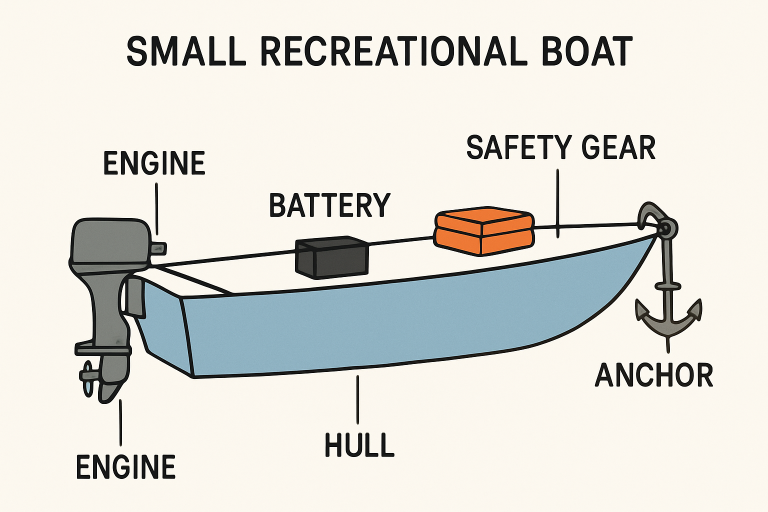
The engine is the powerhouse of your boat. Regular maintenance of its essential components, such as spark plugs, impellers, and fuel filters, is crucial for reliable performance. Carrying spare spark plugs is a simple yet effective way to avoid being left adrift in the event of an ignition failure. Additionally, water and debris can quickly foul a fuel system, making it important to replace fuel filters as recommended by your boat’s manufacturer. A well-maintained engine not only powers your adventures but can prevent serious and costly failures far from shore.

Electrical Systems

Your boat’s electrical system runs everything from navigation lights to critical communication tools and bilge pumps. Inspect wires routinely for corrosion, fraying, or other signs of wear that could compromise performance. Packing spare fuses and an extra battery is a smart way to address sudden electrical issues, keeping you prepared for anything. Remember, functioning electronics are not just convenient; they may be vital in low-visibility conditions or emergencies. Taking time to regularly clean terminals and test connections is a habit every boat owner should form.

Hull and Deck Hardware

The hull and deck form your boat’s core structure. Routine inspections for cracks, blisters, or soft spots prevent issues from escalating into major repairs. Deck hardware, including cleats, winches, and hatches, requires attention to ensure safe docking and smooth operation. Bolts and seals should be tight and corrosion-free. Even small mechanical failures or leaks can quickly compound, affecting your boat’s safety and reliability.

Safety Equipment

Safety is paramount. Life jackets, fire extinguishers, and visual and sound signaling devices are must-haves and should be in good working order and accessible in all weather conditions. Check and replenish your first aid kit supplies regularly, and always ensure safety equipment complies with local regulations. Well-maintained safety equipment can make all the difference in urgent situations.
Navigation Tools

Navigation is more than knowing your destination; it’s about having the right tools to get there safely. Primary devices include GPS units, compasses, and marine radios. Routine testing of these tools guarantees they will be ready when you need them most. Redundancy is also important, so carry backup navigation methods and remain familiar with manual techniques, such as chart reading and dead reckoning, in case electronics fail. A dependable navigation setup will help you stay oriented, avoid hazards, and keep your trips on track.

Plumbing and Bilge Systems

The plumbing and bilge systems manage waste and water, playing a crucial role in keeping the boat dry and functioning. Regularly inspect hoses, pumps, and seacocks for wear or leaks, and use high-quality hose clamps to secure connections. Carrying extra hoses and clamps can enable quick repairs when needed most. Preventing water intrusion will not only safeguard your boat’s integrity but also prevent future mechanical and electrical problems caused by moisture.

Anchoring and Docking Equipment

Effective anchoring and docking gear, such as anchors, lines, and fenders, helps secure your vessel safely in all conditions. Ensuring these items are in good shape and appropriate for your environment helps avoid drifting or damage from collisions. Always check lines for chafing and inspect anchor connections before heading out, especially in rough or unfamiliar waters.

Maintenance Tools and Spare Parts

A comprehensive onboard toolkit should include wrenches, screwdrivers, pliers, and a selection of screws, nuts, and bolts. Additionally, having spare engine belts, hoses, and impellers can keep a minor issue from spoiling your entire outing. Diligence in routine care, along with readiness to address unforeseen breakdowns, is part of being a responsible boat owner.

Final Thoughts

Boating is both a pleasure and a responsibility. Mastering the fundamentals of marine parts, from engine components to safety gear, enables you to enjoy your time on the water without interruption. Regular inspection, maintenance, and carrying necessary spares improve not only your vessel’s lifespan but also the safety and enjoyment for you and your crew. Stay equipped, stay informed, and your boating adventures will be smooth and memorable.


Continue Reading
Click to comment

Leave a Reply

Your email address will not be published. Required fields are marked *

News

Ukrainian: Language, Culture, and Heritage

Published

on

By

Ukrainian: Language, Culture, and Heritage

The history of the Ukrainian language is a cornerstone of the nation’s identity, with origins that scholars trace back over a millennium. According to Professor Larysa Masenko, a leading linguist at the National Academy of Sciences of Ukraine, the Ukrainian language began to emerge in the 6th-7th centuries AD as the Proto-Slavic language deteriorated . This challenges any notion that Ukrainian is simply a dialect of another language.

Recent scholarship strongly affirms the distinct and ancient nature of Ukrainian. Linguist Viktor Moisienko asserts that the written history of the Ukrainian language can be traced back to the mid-11th century. Specific Ukrainian linguistic features are evidenced in church-religious books from that period, written in a Church Slavonic that was adapted to the local Ukrainian context . “In the earliest written period in the East Slavic world,” Moisienko explains, “two language structures can be distinguished: Ukrainian or Rus-Ukrainian (this is the south of Rus, i.e., our lands) and Novgorod-Rus” . This continuity is visible in landmark texts like the Peresopnytsia Gospel (16th century), which was consciously translated into the “Rus language,” the vernacular of the time .

A Chronology of Development

The development of Ukrainian is typically divided into several key periods :

  • Proto-Ukrainian (until mid-11th century): The period before written records, forming the basis of the language.
  • Old Ukrainian (mid-11th to 14th century): The era of Kyivan Rus’, where linguistic features of the spoken language began to appear in written texts, primarily of a religious nature.
  • Middle Ukrainian (15th to 18th century): Often referred to as Ruthenian, this period saw the language used in legal documents, literature, and polemics, particularly within the Grand Duchy of Lithuania and later the Polish-Lithuanian Commonwealth. It was during this time that the language absorbed a significant number of loanwords from Polish, German, and Turkic languages, reflecting the complex political and trade relationships of the era .
  • Modern Ukrainian (from the end of the 18th century): The modern literary language was born, based on the living vernacular dialects. A landmark event was the publication of Ivan Kotliarevsky’s Eneyida in 1798, a burlesque travesty of Virgil’s Aeneid that transformed its heroes into Ukrainian Cossacks and is considered the first literary work published in the modern Ukrainian vernacular .

Language Under Pressure and Revival

The path of the Ukrainian language has been one of constant struggle against assimilation. As parts of Ukraine were incorporated into the Russian Empire, official policies sought to suppress its use. The Valuev Circular of 1863 imposed censorship on Ukrainian publications, followed by the even more restrictive Ems Ukaz of 1876, which banned the printing and importation of Ukrainian books, as well as its use in theatre and music .

This suppression continued in various forms during the Soviet era. The 1920s saw a brief period of Ukrainization, but by the 1930s, Stalinist terror reversed these gains. The Soviet regime engaged in what scholars call “linguicide”—narrowing the social base of the Ukrainian language through terror, repressing Ukrainian linguists, and artificially bringing the language closer to Russian by forcing Russian loanwords and structures into it . Despite this, the language survived, kept alive by its speakers, its folklore, and its writers in Western Ukraine and the diaspora.

Since Ukraine gained independence in 1991, and especially following the Revolution of Dignity in 2014 and the full-scale Russian invasion in 2022, the Ukrainian language has undergone a powerful revival. Many Ukrainian citizens have consciously switched to Ukrainian in their daily lives, reinforcing it as a symbol of national unity and resistance .

The Rich Tapestry of Ukrainian Culture

Ukrainian culture is a vibrant blend of traditions, art, music, and literature that reflects the nation’s soul. It is a culture that has been shaped by both its native roots and interactions with neighboring peoples, yet it has always maintained a distinct character.

Literature: The Voice of the Nation

Ukrainian literature has been a powerful force for national expression. After Kotliarevsky’s foundational work, the literary tradition was cemented by the poet Taras Shevchenko. His work, particularly the collection Kobzar, transcended Romanticism to portray Ukrainian history with stark realism and to satirize the oppression of his people, making him an iconic figure of national revival .

The late 19th and early 20th centuries brought modernism, with figures like the poet and playwright Lesia Ukrainka, whose dramatic poems and dialogues are masterpieces of world literature . The realist novels of Ivan Franko, another giant of Ukrainian culture, chronicled life in Galician society . Despite the devastation of the Soviet era, which saw the “Executed Renaissance” of the 1920s and 1930s wiped out by Stalin’s purges, a new generation of writers continued the tradition, both in Ukraine and in exile .

Music, Art, and Performance

Ukrainian folk music is instantly recognizable, often featuring the bandura, a stringed instrument that is a national symbol . The country’s choral tradition is world-famous, with the melody “Shchedryk,” composed by Mykola Leontovych, becoming the international Christmas classic known as “Carol of the Bells” . Today, groups like DakhaBrakha fuse ancient folk sounds with contemporary rhythms, bringing Ukrainian musical heritage to global audiences .

In visual arts, traditions like Petrykivsky painting, a decorative folk art characterized by floral and plant motifs, are recognized by UNESCO. Pysanka, the art of decorating Easter eggs, is another ancient craft filled with symbolism . The “white on white” embroidery technique of Reshetylivka is a testament to the exquisite craftsmanship found in Ukrainian textile art .

Traditional dance, such as the famous Hopak, is a breathtaking display of athleticism and costume, with its roots in Cossack culture .

Customs, Traditions, and Cuisine

Ukrainian customs are deeply intertwined with the rhythms of nature and the agricultural calendar. Ancient pre-Christian beliefs blend with Christian traditions in celebrations like Ivan Kupala Day (summer solstice) and Malanka (New Year’s Eve) . Social gatherings like Vechornytsi, where communities would come together to work and socialize on long winter evenings, have a long history .

Weddings are elaborate multi-day affairs with many rituals, including the betrothal, the ceremony, and a grand celebration with music, dancing, and feasting . Food is central to these celebrations. Borscht, a hearty beetroot soup, is perhaps the most famous Ukrainian dish. At Christmas, a twelve-course meatless meal is served, featuring kutia, a sweet grain pudding . Other staples include varenyky (pierogi), holubtsi (cabbage rolls), and salo (cured pork fat) .

Safeguarding and Celebrating Heritage

Ukraine takes the preservation of its heritage seriously, with numerous initiatives and institutions dedicated to this task. The National List of Intangible Cultural Heritage of Ukraine is an official registry that now includes 93 elements, from traditional dishes like cabbage rolls and ceremonial breads to unique crafts and rituals like the Crimean Tatar coffee tradition and Hutsul cheese-making .

Museums across the country offer immersive experiences of this heritage. The National Museum of Folk Architecture and Life of Ukraine in Pyrohiv, an open-air museum near Kyiv, is one of the largest in the country. Its territory is divided into zones representing different ethnographic regions, allowing visitors to see traditional houses, windmills, and churches from across Ukraine . Another major center is the National Historical and Ethnographic Reserve “Pereiaslav,” which encompasses over 400 cultural heritage sites and 24 thematic museums, including a unique Museum of Ukrainian Towel (Rushnyk) and a Museum of Kobzar Art .

Other remarkable sites include the village of Urych in the Carpathians, part of the Boykivshchyna ethnographic region, where the Boyk dialect and traditional church rituals are meticulously preserved, and the ruins of the Tustan fortress stand as a monument to medieval history . UNESCO World Heritage Sites, such as the Saint-Sophia Cathedral in Kyiv and the Wooden Tserkvas of the Carpathian region, further underscore the global significance of Ukraine’s cultural legacy .

Conclusion

The story of Ukrainian language, culture, and heritage is one of profound depth and remarkable resilience. From linguistic features documented in the 11th century to the vibrant traditions practiced today, Ukraine possesses a continuous and unbroken cultural thread. Its language, once banned and suppressed, has re-emerged as a powerful symbol of identity and freedom. Its music, art, literature, and customs, from the bandura’s melody to the intricate design of a pysanka, are not mere artifacts of the past but living expressions of a nation’s soul. As Ukraine continues to defend its sovereignty, it simultaneously nurtures and celebrates this invaluable heritage, ensuring it will endure for generations to come.

Continue Reading

News

How Modern Fencing Solutions Shape Outdoor Spaces

Published

on

By

How Modern Fencing Solutions Shape Outdoor Spaces

The world of fencing has evolved far beyond its traditional role as a simple boundary marker. Today’s modern fencing solutions integrate practicality with style, offering homeowners innovative ways to enhance their outdoor living environments. By prioritizing both form and function, property lines have evolved into dynamic elements of landscape design, enabling increased privacy, security, and curb appeal. Working with a reliable fencing contractor Houston TX is the first step towards realizing these contemporary advantages.

From eco-friendly options to smart technologies, fencing is now an essential part of creating personalized, sustainable, and safe outdoor spaces. Whether you aim for a seamless, minimalist look or a statement piece that complements your property’s architecture, the flexibility and innovation in today’s designs provide limitless potential. Let’s explore the major trends that are redefining how we approach outdoor boundaries.

As homeowners increasingly seek ways to personalize their backyards and outdoor environments, the influence of modern fencing trends is more apparent than ever. These solutions not only address security and privacy needs but also promote environmental responsibility and artistic expression.

By understanding and embracing these creative possibilities, you can ensure that your outdoor space is both practical and visually appealing for years to come.

Eco-Friendly Materials

Environmental sustainability is a major driving force behind many fencing innovations. Materials such as bamboo, recycled metals, and composite boards made from wood fibers and recycled plastics are among the top choices for eco-conscious homeowners. These modern alternatives blend natural aesthetics with durability, reducing waste and environmental impact while providing long-lasting solutions. Composite fences, for example, mimic the look of genuine wood but require minimal upkeep, ensuring they remain stylish and strong through years of exposure to the elements. These trends are expected to remain relevant as green building standards continue to rise.

Smart Fencing Solutions

Technology is shaping the next generation of fencing by delivering enhanced security and ease of use. Smart fences are equipped with features such as security cameras, motion sensors, and automated gates, allowing homeowners to remotely monitor activity, receive alerts, and control entry. These systems are ideal for boosting peace of mind and controlling access, offering a sophisticated way to safeguard your outdoor spaces. Innovations such as solar-powered fence panels and integrated lighting are also being adopted to improve both security and energy efficiency. Homeowners interested in smart perimeter solutions can look to industry leaders for guidance on integrating technology into outdoor areas.

Mixed-Material Designs

The blending of different materials—such as stone posts paired with vinyl, or wood and iron together—allows for creative and customizable fencing that stands out. This approach not only enhances visual interest and texture but also delivers practical benefits, such as improved strength and resilience. Mixed-material fences are ideal for those who desire a balance between tradition and innovation, allowing you to create a one-of-a-kind perimeter that fits your property’s architectural style while meeting your security and privacy needs.

Horizontal Slat Fences

Popular in modern landscape architecture, horizontal slat fences are appreciated for their minimalist looks and open yet private design. Constructed from wood, metal, or composite materials, these fences feature clean lines that make spaces appear larger while preserving visibility and airflow. Their contemporary vibe is perfectly suited for urban and suburban homes aiming for a chic, updated exterior.

Fire-Resistant Materials

In wildfire-prone areas, safety is paramount. Modern fencing trends prioritize non-combustible materials such as metal, concrete, and fiber cement to minimize fire risk. These materials meet both regulatory guidelines and homeowner demands for more resilient fencing options. Fire-resistant fences not only protect properties but also maintain their beauty and strength in challenging environments, making them an essential consideration for safety-conscious homeowners.

Customizable and Modular Fencing

Homeowners are increasingly drawn to modular fencing systems due to their flexibility and straightforward installation process. These panel-based systems enable easy customization of height, pattern, and privacy, allowing property owners to modify the fence layout or replace sections without extensive renovations. As a result, outdoor spaces can evolve with your needs, preference for style, or family changes, while installation and maintenance concerns are greatly minimized.

Decorative Elements and Artistic Accents

Fencing has embraced creativity with elements like laser-cut panels, customizable post caps, and adjustable privacy screens, turning boundaries into focal points. Artistic fencing integrates patterns, custom colors, and even built-in artworks, allowing your outdoor perimeter to reflect personal taste and creativity. This trend celebrates self-expression while providing practical solutions for privacy and design harmony.

Minimalistic Design

Minimalist fences, known for their simplicity and understated elegance, are gaining ground in residential design. Featuring clean lines, neutral color palettes, and a lack of ornate detailing, these fences provide a restful backdrop that complements landscaping and modern architecture. Their less-is-more approach not only helps highlight the natural beauty of the yard but also creates a soothing, cohesive environment.

Modern fencing solutions have redefined the function and form of outdoor spaces, bridging the gap between utility and design. With sustainable materials, smart features, and creative customizations driving today’s leading trends, there’s never been a better time to upgrade your fence and transform your property’s boundary into a true extension of your home.

Continue Reading

News

How to Stay Ahead with Timely Notary Renewal

Published

on

By

How to Stay Ahead with Timely Notary Renewal

Key Takeaways

  • Begin the renewal process well in advance of your commission expiration to avoid service interruptions.
  • Stay informed about state-specific renewal requirements and deadlines to ensure timely compliance.
  • Utilize digital tools and resources to track expiration dates and streamline the renewal process.

Table of Contents

  1. Understanding Renewal Timelines
  2. State-Specific Requirements
  3. Digital Tools for Tracking Expiration Dates
  4. Continuing Education and Training
  5. Avoiding Common Renewal Pitfalls
  6. Staying Informed on Notary Law Changes
  7. Conclusion

Keeping your notary commission active is crucial for delivering uninterrupted public services and preserving your professional reputation. An expired commission not only creates unnecessary downtime but can also diminish trust among your clients and business partners. Proactive and timely notary renewal sets you apart as a responsible professional ready to meet the needs of your community. Staying familiar with your state’s renewal requirements—whether you’re in California, Texas, or seeking guidance for your Florida notary renewal—safeguards your credentials and prevents costly gaps in service.

Understanding the unique regulations, keeping track of upcoming expiration dates, and leveraging the latest digital tools make the renewal process manageable and stress-free. Digital calendars, state alerts, and professional resources are now more accessible than ever, empowering notaries to remain compliant and proactive. In today’s evolving legal landscape, it’s also critical to stay adaptable, as state laws and renewal processes are constantly changing. Only those who stay informed will be able to avoid disruption.

Beyond the administrative steps, maintaining a notary commission is about continuous learning and dedication to service excellence. Many states now require some form of ongoing education or training as part of the renewal process, reflecting the growing demands for accountability and competence. Notaries who invest in training and education position themselves for long-term success and demonstrate a commitment to public trust.

As regulatory and technological environments evolve, those who anticipate changes—rather than react to them—will remain in a strong position. Whether you’re a long-time notary or recently certified, prioritizing renewal keeps your business agile and protects your ability to serve the public without interruption.

Understanding Renewal Timelines

Each state sets its own notary renewal timeline, making it critical to familiarize yourself with your jurisdiction’s process. For example, California recommends starting your renewal and scheduling the notary exam at least six months before your commission expires, and not more than twelve months in advance. This buffer helps you avoid overlaps in your commission and ensures a seamless transition from one term to the next. Waiting until the last minute can result in costly delays and even a temporary loss of your commission, which can affect your business and reputation.

State-Specific Requirements

Each state or district imposes different requirements and deadlines. For instance, in the District of Columbia, the Office of Notary Commissions and Authentications (ONCA) requires that submitted renewal applications be received months in advance of the expiration date. An application for a commission expiring on April 14 must be received by February 3 to guarantee uninterrupted service. Verify whether your state mandates continuing education, fingerprinting, or retesting during the renewal process, and keep detailed records of correspondence and deadlines specific to your location.

Digital Tools for Tracking Expiration Dates

Digital reminders are invaluable for busy notaries. Use smartphone calendar apps, reminder software, or even specialized notary commission management tools to set alerts at regular intervals as your expiration date approaches. Automating reminders at three months, one to ensure timely compliance, and two weeks in advance can help you avoid potentially costly lapses. Popular digital calendars, such as Google Calendar or Microsoft Outlook, integrate seamlessly with most work systems, making them practical for tracking essential milestones. Solutions for optimizing business workflows, such as these workflow tools, can also be adapted to track compliance deadlines.

Continuing Education and Training

States increasingly require notaries to complete continuing education or refresher courses to maintain high professional standards. Even if your state does not mandate classes, participating in workshops, webinars, or online courses can help you stay current on legal obligations and best practices. This ongoing education enables you to avoid errors that could jeopardize your commission and builds client trust in your expertise.

Avoiding Common Renewal Pitfalls

The most frequent issues include missing deadlines, incomplete submissions, or forgetting to fulfill continuing education requirements. Organization is your best ally: maintain a renewal checklist, store digital copies of your official correspondence, and keep up-to-date with changes from your state’s notary authority. Engaging with professional notary forums or subscribing to major legal publications, such as Nolo’s Notary FAQ, can connect you with timely news and support to avoid costly mistakes.

Staying Informed on Notary Law Changes

Legislation affecting notaries evolves rapidly. To keep your practice compliant, subscribe to newsletters and legal updates from your state’s notary authority or larger professional associations. Government websites and respected legal media, such as the National Notary Bulletin, provide up-to-date news on legal changes, best practices, and essential deadlines that directly impact the renewal process.

Conclusion

Staying ahead with timely notary renewal takes organization, awareness, and commitment. By understanding your commission renewal timeline, adhering to state-specific requirements, utilizing digital tracking tools, participating in continuing education, avoiding common pitfalls, and staying informed about changes in notary law, you can ensure that your service to the public remains seamless and trusted. Continuous attention to these steps not only protects your career but also upholds the standards of the notarial profession as a whole.

Continue Reading

Trending