Connect with us

News

Ukrainian: Language, Culture, and Heritage

Published

on

Ukrainian: Language, Culture, and Heritage

The history of the Ukrainian language is a cornerstone of the nation’s identity, with origins that scholars trace back over a millennium. According to Professor Larysa Masenko, a leading linguist at the National Academy of Sciences of Ukraine, the Ukrainian language began to emerge in the 6th-7th centuries AD as the Proto-Slavic language deteriorated . This challenges any notion that Ukrainian is simply a dialect of another language.

Recent scholarship strongly affirms the distinct and ancient nature of Ukrainian. Linguist Viktor Moisienko asserts that the written history of the Ukrainian language can be traced back to the mid-11th century. Specific Ukrainian linguistic features are evidenced in church-religious books from that period, written in a Church Slavonic that was adapted to the local Ukrainian context . “In the earliest written period in the East Slavic world,” Moisienko explains, “two language structures can be distinguished: Ukrainian or Rus-Ukrainian (this is the south of Rus, i.e., our lands) and Novgorod-Rus” . This continuity is visible in landmark texts like the Peresopnytsia Gospel (16th century), which was consciously translated into the “Rus language,” the vernacular of the time .

A Chronology of Development

The development of Ukrainian is typically divided into several key periods :

  • Proto-Ukrainian (until mid-11th century): The period before written records, forming the basis of the language.
  • Old Ukrainian (mid-11th to 14th century): The era of Kyivan Rus’, where linguistic features of the spoken language began to appear in written texts, primarily of a religious nature.
  • Middle Ukrainian (15th to 18th century): Often referred to as Ruthenian, this period saw the language used in legal documents, literature, and polemics, particularly within the Grand Duchy of Lithuania and later the Polish-Lithuanian Commonwealth. It was during this time that the language absorbed a significant number of loanwords from Polish, German, and Turkic languages, reflecting the complex political and trade relationships of the era .
  • Modern Ukrainian (from the end of the 18th century): The modern literary language was born, based on the living vernacular dialects. A landmark event was the publication of Ivan Kotliarevsky’s Eneyida in 1798, a burlesque travesty of Virgil’s Aeneid that transformed its heroes into Ukrainian Cossacks and is considered the first literary work published in the modern Ukrainian vernacular .

Language Under Pressure and Revival

The path of the Ukrainian language has been one of constant struggle against assimilation. As parts of Ukraine were incorporated into the Russian Empire, official policies sought to suppress its use. The Valuev Circular of 1863 imposed censorship on Ukrainian publications, followed by the even more restrictive Ems Ukaz of 1876, which banned the printing and importation of Ukrainian books, as well as its use in theatre and music .

This suppression continued in various forms during the Soviet era. The 1920s saw a brief period of Ukrainization, but by the 1930s, Stalinist terror reversed these gains. The Soviet regime engaged in what scholars call “linguicide”—narrowing the social base of the Ukrainian language through terror, repressing Ukrainian linguists, and artificially bringing the language closer to Russian by forcing Russian loanwords and structures into it . Despite this, the language survived, kept alive by its speakers, its folklore, and its writers in Western Ukraine and the diaspora.

Since Ukraine gained independence in 1991, and especially following the Revolution of Dignity in 2014 and the full-scale Russian invasion in 2022, the Ukrainian language has undergone a powerful revival. Many Ukrainian citizens have consciously switched to Ukrainian in their daily lives, reinforcing it as a symbol of national unity and resistance .

The Rich Tapestry of Ukrainian Culture

Ukrainian culture is a vibrant blend of traditions, art, music, and literature that reflects the nation’s soul. It is a culture that has been shaped by both its native roots and interactions with neighboring peoples, yet it has always maintained a distinct character.

Literature: The Voice of the Nation

Ukrainian literature has been a powerful force for national expression. After Kotliarevsky’s foundational work, the literary tradition was cemented by the poet Taras Shevchenko. His work, particularly the collection Kobzar, transcended Romanticism to portray Ukrainian history with stark realism and to satirize the oppression of his people, making him an iconic figure of national revival .

The late 19th and early 20th centuries brought modernism, with figures like the poet and playwright Lesia Ukrainka, whose dramatic poems and dialogues are masterpieces of world literature . The realist novels of Ivan Franko, another giant of Ukrainian culture, chronicled life in Galician society . Despite the devastation of the Soviet era, which saw the “Executed Renaissance” of the 1920s and 1930s wiped out by Stalin’s purges, a new generation of writers continued the tradition, both in Ukraine and in exile .

Music, Art, and Performance

Ukrainian folk music is instantly recognizable, often featuring the bandura, a stringed instrument that is a national symbol . The country’s choral tradition is world-famous, with the melody “Shchedryk,” composed by Mykola Leontovych, becoming the international Christmas classic known as “Carol of the Bells” . Today, groups like DakhaBrakha fuse ancient folk sounds with contemporary rhythms, bringing Ukrainian musical heritage to global audiences .

In visual arts, traditions like Petrykivsky painting, a decorative folk art characterized by floral and plant motifs, are recognized by UNESCO. Pysanka, the art of decorating Easter eggs, is another ancient craft filled with symbolism . The “white on white” embroidery technique of Reshetylivka is a testament to the exquisite craftsmanship found in Ukrainian textile art .

Traditional dance, such as the famous Hopak, is a breathtaking display of athleticism and costume, with its roots in Cossack culture .

Customs, Traditions, and Cuisine

Ukrainian customs are deeply intertwined with the rhythms of nature and the agricultural calendar. Ancient pre-Christian beliefs blend with Christian traditions in celebrations like Ivan Kupala Day (summer solstice) and Malanka (New Year’s Eve) . Social gatherings like Vechornytsi, where communities would come together to work and socialize on long winter evenings, have a long history .

Weddings are elaborate multi-day affairs with many rituals, including the betrothal, the ceremony, and a grand celebration with music, dancing, and feasting . Food is central to these celebrations. Borscht, a hearty beetroot soup, is perhaps the most famous Ukrainian dish. At Christmas, a twelve-course meatless meal is served, featuring kutia, a sweet grain pudding . Other staples include varenyky (pierogi), holubtsi (cabbage rolls), and salo (cured pork fat) .

Safeguarding and Celebrating Heritage

Ukraine takes the preservation of its heritage seriously, with numerous initiatives and institutions dedicated to this task. The National List of Intangible Cultural Heritage of Ukraine is an official registry that now includes 93 elements, from traditional dishes like cabbage rolls and ceremonial breads to unique crafts and rituals like the Crimean Tatar coffee tradition and Hutsul cheese-making .

Museums across the country offer immersive experiences of this heritage. The National Museum of Folk Architecture and Life of Ukraine in Pyrohiv, an open-air museum near Kyiv, is one of the largest in the country. Its territory is divided into zones representing different ethnographic regions, allowing visitors to see traditional houses, windmills, and churches from across Ukraine . Another major center is the National Historical and Ethnographic Reserve “Pereiaslav,” which encompasses over 400 cultural heritage sites and 24 thematic museums, including a unique Museum of Ukrainian Towel (Rushnyk) and a Museum of Kobzar Art .

Other remarkable sites include the village of Urych in the Carpathians, part of the Boykivshchyna ethnographic region, where the Boyk dialect and traditional church rituals are meticulously preserved, and the ruins of the Tustan fortress stand as a monument to medieval history . UNESCO World Heritage Sites, such as the Saint-Sophia Cathedral in Kyiv and the Wooden Tserkvas of the Carpathian region, further underscore the global significance of Ukraine’s cultural legacy .

Conclusion

The story of Ukrainian language, culture, and heritage is one of profound depth and remarkable resilience. From linguistic features documented in the 11th century to the vibrant traditions practiced today, Ukraine possesses a continuous and unbroken cultural thread. Its language, once banned and suppressed, has re-emerged as a powerful symbol of identity and freedom. Its music, art, literature, and customs, from the bandura’s melody to the intricate design of a pysanka, are not mere artifacts of the past but living expressions of a nation’s soul. As Ukraine continues to defend its sovereignty, it simultaneously nurtures and celebrates this invaluable heritage, ensuring it will endure for generations to come.

Continue Reading
Click to comment

Leave a Reply

Your email address will not be published. Required fields are marked *

News

Tehran fuel dumps burn as Iran warns it can fight for months

Published

on

By

Tehran fuel dumps burn as Iran warns it can fight for months

Tehran – The Iranian capital awoke to a choking haze of toxic smoke on Sunday after Israeliairstrikes targeted major fuel storage facilities, triggering massive fires and prompting urgent health warnings from officials. The attack marks a significant escalation in the ongoing conflict, with Tehran vowing retaliation and warning it is prepared to fight for months.

Inferno in the Capital

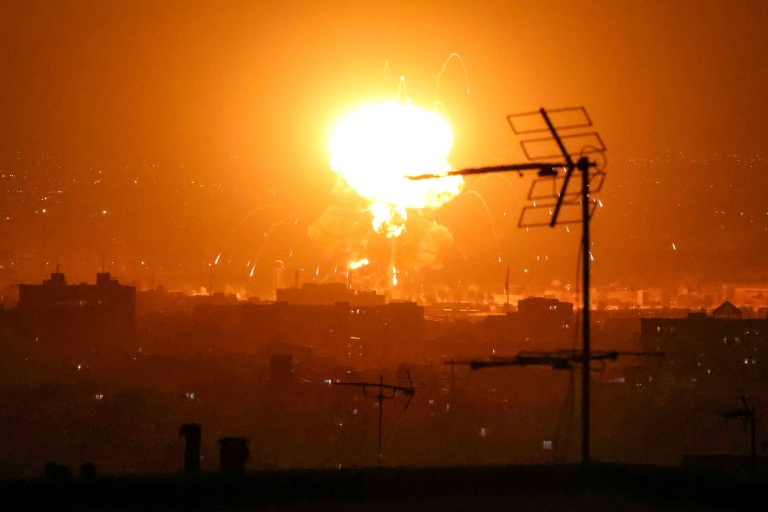
Large explosions rocked Tehran and the neighbouring Alborz province late on Saturday, with verified videos showing huge balls of fire and thick columns of black smoke rising into the night sky . The Israeli military confirmed it struck approximately 30 fuel depots across Iran, describing the operation as a “significant strike” aimed at dismantling military infrastructure used by Iran’s armed forces .

Iran’s National Iranian Oil Refining and Distribution Company reported that multiple oil depots in Tehran and Alborz provinces were hit by missiles and caught fire, with firefighting teams working to contain the blazes . The semi-official Tasnim news agency reported that six people were killed and 21 others injured in an attack on one storage facility in Alborz province .

This weekend’s strikes represent the first major assault on Iran’s energy infrastructure since the United States and Israel launched joint attacks on February 28, which killed Supreme Leader Ayatollah Ali Khamenei and more than 1,200 others .

Environmental and Health Crisis

The aftermath of the strikes has created a public health emergency in the capital. Residents reported a disturbing phenomenon on Sunday morning, with a CNN correspondent in Tehran describing it as “raining oil” as residue from burning fuel depots mixed with precipitation .

The Iranian Red Crescent Society issued an urgent warning for residents to remain indoors due to the risk of lung and skin diseases from acid rain and toxic vapours produced by burning fuel and chemicals . According to Iranian state media, pollutants have already entered Tehran’s urban areas, with officials warning that toxic compounds from the burning oil depots could generate dangerous acid rain if precipitation continues .

Iranian Foreign Ministry spokesman Esmaeil Baghaei condemned the strikes as “war crimes and crimes against humanity,” alleging that by targeting fuel depots, the aggressors were “releasing hazardous materials and toxic substances into the air, poisoning civilians, devastating the environment, and endangering lives on a massive scale” .

Iran’s Warning: Ready for a Long Fight

Amid the devastation, Iranian military officials have issued stark warnings about their capacity and intent to sustain a prolonged conflict. The Islamic Revolutionary Guard Corps (IRGC) has declared that the country is prepared to fight a “long war” and may deploy advanced weapons systems that have never been used before in the current conflict .

Major General Ali Mohammad Naeini, an IRGC spokesman, stated that Iran is fully prepared for what it described as a “long war” and is ready to introduce new advanced weapons systems. “These technologies have not yet been widely used,” Naeini said, adding that Iran’s enemies could face intense attacks in the next wave of military operations .

The IRGC also confirmed it had launched retaliatory strikes against Israeli infrastructure, claiming responsibility for attacking a refinery in Israel’s Haifa using Kheibarshekan missiles in response to the strikes on Iranian energy facilities .

Regional Retaliation Threats

Perhaps most alarmingly for global markets, Iran has threatened to expand the conflict to regional energy infrastructure if attacks on its own facilities continue. Ebrahim Zolfaghari, spokesman for Iran’s Khatam al-Anbiya Central Headquarters, warned Muslim states in the region to prevent US and Israeli attacks on Iranian fuel and energy facilities, cautioning that Tehran would respond with similar actions if strikes persist .

“Otherwise, similar actions will be taken in the region,” Zolfaghari said. “If you can tolerate oil prices above $200 per barrel, keep playing this game” . A similar warning came from another Iranian military spokesperson, who noted that Iran has so far avoided targeting regional energy infrastructure but cautioned that if it does so, global oil prices could surge dramatically .

US Concerns and Political Fallout

The scale of Saturday’s strikes has reportedly caught Washington off guard and created rare friction between the United States and Israel. According to US news outlet Axios, American officials were surprised by the breadth of the attacks, which exceeded what they expected after Israel notified Washington ahead of the operation .

“The president doesn’t like the attack on the oil facilities. He wants to save the oil, not burn it. And it reminds people of higher gas prices,” said an adviser to President Donald Trump . A senior US official added, “We don’t think it was a good idea” .

Washington’s concerns appear rooted in both political and strategic calculations. With gasoline prices rising more than 14 percent in the past week across the United States, the White House faces potential domestic political fallout . Officials also fear that attacking infrastructure serving ordinary Iranians could backfire by strengthening public support for the Iranian leadership .

Humanitarian Toll

The human cost of the escalating conflict continues to mount. Since fighting intensified on February 28, Iranian officials report that 1,205 civilians have been killed, including 194 children . Residents described living in a climate of fear as airstrikes continue and internet services are intermittently cut.

“It’s very scary. Day and night, eating and sleeping — it’s all over the place,” one unnamed resident of western Tehran told reporters . Another resident in central Tehran expressed uncertainty about the future while noting that basic services were still functioning: “God knows what will happen to us. We still have water, electricity and food” .

Regional Spillover

The conflict has already begun to spread beyond direct strikes between Iran and Israel. Iran has reportedly attacked infrastructure in Gulf Arab states, including a desalination plant in Bahrain, raising concerns about broader regional destabilisation . Shipping through the Strait of Hormuz has been disrupted, affecting oil exports from Saudi Arabia, the UAE, Qatar, Iraq, and Kuwait .

European nations are also feeling the impact, with natural gas prices surging approximately 70 percent since the conflict escalated . Analysts warn that if hostilities continue, energy supplies could be further disrupted, driving prices higher and potentially triggering another energy crisis for Europe .

What Comes Next

As thick smoke continues to rise over Tehran and residents grapple with environmental hazards, the region stands at a precarious crossroads. Iran has demonstrated both its vulnerability to precision strikes on energy infrastructure and its willingness to threaten asymmetric retaliation across the region.

With Tehran warning it can fight for months and potentially introduce new weapons systems, and with Washington showing discomfort with the scope of Israeli operations, the coming days may prove critical in determining whether this conflict expands further or whether diplomatic offensives can gain traction.

Continue Reading

News

Questions over AI Capability as Tech Guides Iran Strikes

Published

on

By

Questions over AI Capability as Tech Guides Iran Strikes

The recent strikes on Iran, which resulted in the death of Supreme Leader Ayatollah Ali Khamenei and other top officials, mark a watershed moment in military history. For the first time, advanced artificial intelligence (AI) systems played an integral role in the targeting and execution of large-scale combat operations. While the geopolitical ramifications are still unfolding, a parallel debate is intensifying over the rapidly growing—and potentially destabilizing—role of AI in modern warfare .

Reports from the battlefield reveal a complex picture: the US military utilized AI-powered tools to identify targets and analyze intelligence, even as a public dispute erupted with the tech company behind the technology. Simultaneously, Iran is rushing to integrate AI into its own defense systems, signaling a new arms race not just in missiles and drones, but in the algorithms that guide them .

The Maven Smart System and the “Speed of Thought”

At the center of the US-led “Operation Epic Fury” was the Maven Smart System, a sophisticated AI platform developed by data analytics company Palantir Technologies and enhanced with Anthropic’s Claude AI model . According to reports from the Washington Post cited by Anadolu Ajansı, the system was used to analyze massive volumes of classified intelligence from satellites and surveillance platforms to generate hundreds of potential targets in Iran. It provided exact geographic coordinates and ranked them based on operational importance .

The integration of AI has compressed military planning timelines dramatically. Military sources described a shift from weeks of preparation to near-real-time operational decisions. “The AI machine is making recommendations for what to target, which is actually much quicker in some ways than the speed of thought,” explained Craig Jones, a lecturer in political geography, highlighting how AI allows for simultaneous, decapitation-style strikes that would have taken days or weeks to coordinate in past conflicts .

This capability was crucial in the joint US-Israeli operation that killed Ayatollah Khamenei. The New York Times reported that the CIA had been tracking the Supreme Leader’s patterns for months. When intelligence indicated a rare gathering of top security officials at a compound in Tehran, the US and Israel used AI-assisted planning to adjust their strike timeline, turning a routine meeting into a critical strategic victory .

A Tech Backlash: The Anthropic Dispute

The effectiveness of the technology, however, is matched only by the controversy surrounding its use. The strikes occurred against the backdrop of a fierce dispute between the Trump administration and Anthropic, the company behind the Claude AI model integrated into the Maven system .

Just hours before the bombing campaign began, the administration announced it was barring government agencies from using Anthropic’s technology, labeling it a “supply chain risk” and a “security threat” following a breakdown in negotiations . Anthropic had reportedly sought restrictions on how its tools could be used, specifically concerning mass domestic surveillance and fully autonomous weapons .

Despite the ban, the military continued to use the system during the critical initial strikes, highlighting a growing dependency on commercial AI tools that the Pentagon may find difficult to sever . The incident underscores a central question of the AI age: can the tech industry retain ethical control over its inventions once they are integrated into the “kill chain”?

Iran’s AI Defense Buildup

As US B-2 stealth bombers struck fortified underground facilities, Iran’s military leadership has been touting its own AI advancements, framing them as essential for deterrence and sovereignty .

In the weeks leading up to the strikes, Iran’s defense establishment accelerated its AI integration. Defense Minister Brigadier General Aziz Nasirzadeh emphasized the “imperative nature of the application of artificial intelligence technologies to drone production processes,” noting that the country had integrated 1,000 new UAVs capable of “smartization” .

The Islamic Revolutionary Guard Corps (IRGC) Navy has announced the development of long-range cruise missiles exceeding 1,000 kilometers that integrate AI for enhanced targeting . Furthermore, Iran’s “Silicon Valley”—the Pardis Technology Park near Tehran—has become a hub for developing domestic software and hardware for missile programs, specifically designed to circumvent international sanctions .

The New Battlefield

Despite the US ban on Anthropic, the military is already transitioning to alternative models from OpenAI, which struck a deal with the Pentagon just days after the strikes began . For its part, Iran’s Defense Ministry has halted the public unveiling of new achievements to preserve the “element of surprise,” though officials confirm that AI-driven systems continue to be integrated operationally .

The strikes on Iran demonstrate that AI is no longer a peripheral tool in warfare but a central component of both offensive and defensive strategy. As algorithms take on a greater role in targeting and decision-making, the world is left grappling with the ethical and strategic implications of a future where the speed of war is dictated by the speed of code.

Continue Reading

News

How Forklift Certification Drives Safer Workplaces

Published

on

By

Forklift Certification

Table of Contents

  • Reducing Accident Rates
  • Enhancing Operational Efficiency
  • Compliance with Regulatory Standards
  • Building a Culture of Safety
  • Financial Benefits of Certification
  • Final Thoughts

Maintaining a safe workplace is a top priority for industries that rely on heavy machinery. Nowhere is this more evident than in environments where forklifts are critical to operations, such as warehouses, distribution centers, manufacturing plants, and construction sites. The potential dangers associated with forklift operation are significant, ranging from property damage to tragic injuries or even fatalities. By investing in proper forklift training, companies significantly reduce the risk of costly accidents and ensure that employees are equipped with the skills necessary to perform their duties safely. Effective training is not only essential for compliance, but it also lays the foundation for a culture where safety becomes an ingrained part of the daily routine. Engaged, well-trained employees are more likely to follow established protocols, recognize hazards before they escalate, and respond confidently in unexpected situations.

Certification programs serve a dual purpose. They both satisfy regulatory requirements, helping companies avoid fines and other penalties, and empowering operators to do their jobs more efficiently and confidently. Trained forklift operators experience fewer incidents, which translates to lower injury rates and enhanced operational performance for the entire organization. Furthermore, certification is a clear indicator to clients, inspectors, and employees that a company values both compliance and safety. This commitment often extends beyond basic legal requirements, nurturing a workplace where continuous improvement is prioritized, and risk management is a shared responsibility among all employees.

Reducing Accident Rates

Forklift accidents represent a consistent threat in warehouses, distribution centers, and construction sites, environments where people and heavy equipment interact closely. The Occupational Safety and Health Administration (OSHA) consistently reports that operator error is the leading factor in more than a third of all forklift-related incidents, and many of these incidents can be traced to inadequate training or a lack of situational awareness. Comprehensive certification and safety programs have been proven to substantially reduce these figures by focusing on hazard awareness, maneuvering skills, and proper load-handling techniques.

When operators understand the specific challenges they may face, such as confined workspaces, blind spots, crowded aisles, or shifting loads, they are better prepared to react safely and effectively. Regular training provides operators with the experience and confidence they need to navigate unexpected situations, reinforcing correct procedures through repetition. These improved reactions dramatically lower the risk of collisions, tip-overs, load spills, and other common mishaps that can have serious consequences for both workers and companies.

Enhancing Operational Efficiency

Certified forklift operators are not just safer; they are also more efficient. Proper training ensures that operators move products swiftly, accurately, and with precision, minimizing risks such as product damage, misplaced inventory, workplace congestion, and operational slowdowns. A well-trained forklift operator understands how to balance speed with caution, ensuring that productivity never comes at the expense of safety. When operators know how to proactively maintain and inspect their equipment, unplanned downtime due to malfunctions is reduced, keeping workflows running smoothly and minimizing the risk of costly delays.

Knowledgeable operators are also more likely to comply with load capacities and recommended handling methods, helping prevent equipment breakdowns and product destruction. This boosts productivity while simultaneously limiting unnecessary wear and tear on costly machinery. As a result, overall operational performance improves—companies see a direct impact on their bottom line through increased output, reduced maintenance needs, and more streamlined logistics. In industries where timing and reliability are essential for success, the value of skilled, certified forklift operators cannot be overstated.

Compliance with Regulatory Standards

Compliance with local and federal regulations is mandatory for forklift operation. OSHA’s Powered Industrial Truck Standard is widely recognized in the United States, and violations related to forklift use regularly rank among the most frequently cited in industrial settings. In one recent fiscal year, OSHA issued over 2,400 citations and assessed fines totaling more than $8 million, often for infractions that could have been avoided through routine certification and training. Organizations that require operators to become certified not only fulfill their legal obligations but also shield themselves from costly penalties and liabilities arising from accidents or improper practices.

Building a Culture of Safety

Establishing a culture that prioritizes safety is a key benefit of certification programs. When employees are thoroughly educated about risks and best practices, they become active participants in hazard identification and incident prevention. A culture of safety encourages team members to communicate openly, report unsafe conditions promptly, and adhere to established procedures without shortcuts, knowing that their actions directly impact not just their own safety but the well-being of their coworkers.

This proactive mindset leads to an environment where safety is a shared responsibility and where employees look out for themselves and their peers, fostering trust and mutual respect. As reported by the Occupational Safety and Health Administration, robust safety cultures correlate with higher job satisfaction and employee morale, both of which contribute to reduced turnover and improved productivity. An investment in certification is an investment in people, sending a powerful message that they are valued and their health is a top priority, which, in turn, influences workplace loyalty and engagement.

Financial Benefits of Certification

There are notable financial incentives for businesses that invest in forklift certification. Reduced accident rates mean lower injury costs, fewer worker compensation claims, and less equipment damage. These direct cost savings alone justify investing in regular training. Insurers often reward companies that demonstrate a commitment to safety with lower premiums and reduced deductibles, while avoiding regulatory penalties provides an additional layer of financial protection.

Industry research indicates that for every dollar spent on safety, businesses can expect a return of four to six dollars in avoided accidents and legal costs. Decreasing the frequency and severity of incidents means fewer lost workdays, lower medical expenses, and minimal impact on operational continuity. Over time, these savings can be redirected towards further safety initiatives, new technology, or other operational improvements, all of which contribute to the business’s long-term stability and growth. Ultimately, the bottom line is not just improved by reducing expenses, but also by fostering an environment where productivity and efficiency thrive as a direct result of heightened safety awareness.

Final Thoughts

Forklift certification is a cornerstone of workplace safety and operational excellence. It addresses the risks inherent in forklift operation by equipping workers with the skills and knowledge necessary for safe equipment handling. In addition to reducing accident rates and enhancing efficiency, certification ensures regulatory compliance, supports a culture of ongoing safety, and drives significant financial benefits. Organizations that prioritize comprehensive training are better positioned to protect their workforce and thrive within competitive industries. Making certification a non-negotiable part of company policy is not just a regulatory necessity; it is a smart business decision that pays ongoing dividends in safety, efficiency, and long-term success.

Continue Reading

Trending